



From Utility to University
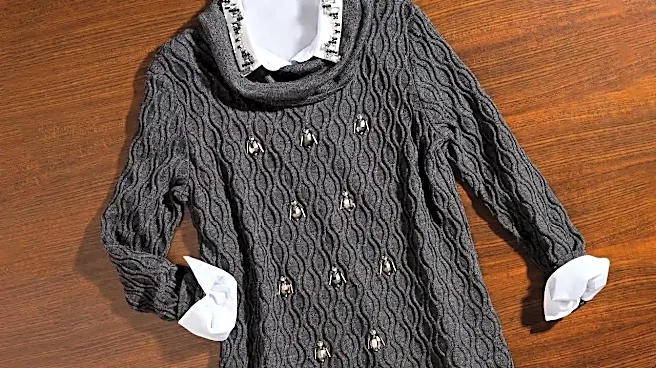
The wool sweater’s journey into the American wardrobe is a story of migration, both of people and purpose. It began as a purely functional garment. The heavily cabled Aran sweater, for instance, arrived with Irish immigrants, its lanolin-rich wool and dense
stitches providing a natural water-repellent barrier against the harsh Atlantic. This was clothing as equipment, designed for fishermen and laborers. Similarly, brands like Woolrich, founded in 1830, supplied woolen goods to loggers and trappers, cementing wool's association with rugged American practicality. But its genius lies in its adaptability. By the mid-20th century, these same hardworking sweaters were being adopted by a completely different set: the students of the northeastern Ivy League universities. A Shetland or cable-knit sweater, worn over a button-down shirt, became a key part of the preppy uniform, signifying a kind of casual, intellectual refinement that was distinctly American.
The Icons of Knitwear Cool
A garment’s status is often cemented by the people who wear it, and the wool sweater has had some of the best ambassadors in American culture. When The Clancy Brothers, an Irish folk group, appeared on The Ed Sullivan Show in their matching Aran sweaters, they brought the style into millions of American living rooms. But it was Steve McQueen who arguably perfected the sweater’s masculine, anti-hero cool. In “The Thomas Crown Affair,” his chunky Aran knit wasn’t preppy; it was rugged, thoughtful, and effortlessly stylish. It projected a self-assuredness that needed no explanation. From John F. Kennedy sailing off the coast of New England in a simple crewneck to Chris Evans reviving the Aran sweater's popularity in the film “Knives Out,” the garment has consistently been used to signal a character who is comfortable in their own skin, whether they are an adventurer, a president, or a detective.
A Statement of Quiet Luxury
In a modern world saturated with fast fashion and conspicuous logos, the wool sweater makes a different kind of statement. It has become a hallmark of “quiet luxury” or “stealth wealth”—a style defined by high-quality materials, timeless design, and an absence of overt branding. A well-made wool sweater doesn't shout its value; it whispers it through superior craftsmanship, rich texture, and a perfect fit. Choosing a cashmere V-neck, a merino wool crewneck, or a traditional Aran knit is an investment in longevity over fleeting trends. It communicates a sense of permanence and an appreciation for things that are built to last. This philosophy aligns perfectly with a certain American ideal of durable, unpretentious quality—the same spirit found in a well-made pair of boots or a classic denim jacket.
The Sweater for Every Tribe
Perhaps the wool sweater’s most defining quality is its versatility. It’s a rare garment that feels equally at home on a Maine lobsterman, a Harvard professor, a Silicon Valley CEO, or a grunge musician in the Pacific Northwest. The same basic item can be interpreted in countless ways. A chunky, hand-knit cardigan can feel rustic and cozy. A sleek, dark merino wool pullover can be sharp and minimalist. A worn-in, oversized sweater can be a symbol of counter-culture comfort. This chameleon-like ability to cross social and aesthetic boundaries is what makes it so quintessentially American. It’s a democratic garment that can be dressed up or down, adopted and personalized by nearly any style tribe, all while retaining its core identity of comfort, function, and enduring style.