




The Great Festival Stagnation
Let’s be honest: scanning the top lines of North American festival posters has become an exercise in spotting the differences. You have your legacy rock act (Foo Fighters, Red Hot Chili Peppers), your indie-pop superstar (Lana Del Rey, SZA), and your stadium-filling
electronic duo (Odesza, Flume). They are all fantastic performers, but their ubiquity has created a sense of homogenization. When the biggest festivals in the country share two or even three headliners, it blunts the sense of occasion. You’re not traveling for a once-in-a-lifetime experience; you’re just choosing a different field in which to see the same tour. This presents a particular challenge for Bonnaroo. While Coachella is about celebrity and Lollapalooza is about the city, Bonnaroo’s identity has always been tied to the immersive, communal experience on “The Farm.” It’s a place where the undercard can feel as important as the headliners, and where late-night sets become the stuff of legend. But to protect that identity, Bonnaroo can’t just be another stop on the festival circuit. It needs to offer something genuinely different.
The 'Secret' Lane: Global Pop's Next Wave
The solution isn’t some obscure, undiscovered genre. It’s a global movement that’s been hiding in plain sight, selling out stadiums everywhere *except* America’s festival fields: Afrobeats. To call it a “secret” is almost laughable. Artists like Burna Boy, Wizkid, and Tems are legitimate global superstars, commanding billions of streams and drawing massive, passionate crowds from London to Lagos. Burna Boy was the first African artist to headline a U.S. stadium, selling out New York’s Citi Field. Rema’s “Calm Down” has become a planetary anthem. This isn’t an emerging scene; it’s a dominant force in modern pop music. Yet, on U.S. festival posters, these artists are often relegated to the mid-card—a bafflingly cautious approach. Coachella gave Burna Boy a prime slot that became one of the festival’s most talked-about sets, but he still wasn't a top-line headliner. This hesitation from bookers has created an incredible opportunity. The first major U.S. camping festival to give an Afrobeats superstar a true, no-questions-asked headlining slot will instantly differentiate itself and feel like a vital cultural event.
A Perfect Match for The Farm
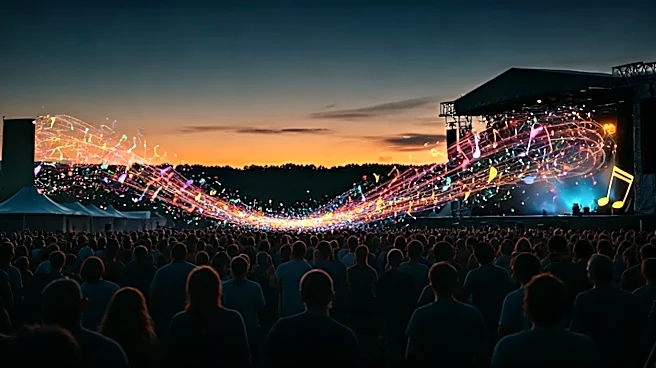
Bonnaroo is the perfect place for this gamble. More than any other festival, its soul is rooted in groove, instrumentation, and marathon sets that blur the line between artist and audience. The DNA of the festival, born from the jam-band scene, is about communal energy and musical discovery. Afrobeats fits this ethos perfectly. The music is built on infectious rhythms, intricate live instrumentation, and a celebratory spirit that is tailor-made for a massive, dancing crowd under the Tennessee stars. Imagine a two-hour headlining set from Wizkid on the What Stage, complete with a full live band, horns, and dancers, creating a pulsing, joyous spectacle. Or a late-night tent set from an artist like Asake that keeps the energy going until sunrise. This isn't just about ticking a diversity box; it’s about plugging into a vibrant, powerful musical culture that aligns with everything Bonnaroo claims to be. It would create “you had to be there” moments that have defined Bonnaroo’s greatest years, echoing legendary sets from the likes of The Flaming Lips or Skrillex’s Superjam.
Breaking the Booking Mold
Booking an Afrobeats headliner for 2026 would be a bold statement. It would signal that Bonnaroo is recommitting to its role as a tastemaker, not just a follower of trends. It would attract a new, diverse audience while giving the existing Bonnaroo faithful what they’ve always craved: a unique and unforgettable musical experience that they can’t get anywhere else. The risk is minimal; these artists are proven headliners on a global scale. The reward is a refreshed identity and a festival that feels genuinely essential again. The lane is wide open. While other festivals continue to recycle the same handful of rock and pop acts, Bonnaroo can look to the future by embracing the global present. It's not about abandoning the festival’s rock, indie, and electronic roots, but about adding a powerful new flavor that makes the entire lineup feel more exciting and worldly.