


The Sound of “Prestige”
First, let’s define our terms. “Prestige” sound isn’t bad sound. In fact, it’s often technically flawless. Think of your typical Oscar-nominated historical drama. The dialogue is crystal clear, mixed front and center so you never miss a word. The soaring orchestral score swells at precisely the right emotional moments, telling you exactly how to feel. The sound effects—a teacup clinking, a horse galloping—are clean, distinct, and serve the picture without ever distracting from it. This is sound as a supportive, well-behaved servant to the narrative. It’s polished, professional, and entirely safe. It’s designed to be appreciated for its craftsmanship, but it rarely challenges the audience or becomes a primary storytelling tool in its own right.
It’s the sonic equivalent of a beautifully tailored suit: impressive and correct, but ultimately a surface-level presentation.
The Art of Immersion
Art-house immersion is a different beast entirely. It treats the entire soundscape as a narrative canvas. Instead of prioritizing dialogue above all else, it might bury it under layers of ambient noise to create a sense of realism or character subjectivity. Sound is used to build the world beyond the frame, creating a 360-degree environment that feels lived-in and often unsettling. Consider Jonathan Glazer’s Cannes Grand Prix winner, *The Zone of Interest*. The film rarely shows the horrors of the Auschwitz concentration camp next door to the protagonists’ home. Instead, we hear it: a constant, low-level hum of industrial violence, distant shouts, and machinery. The sound design works in chilling counterpoint to the placid visuals of a family gardening. This isn't sound supporting the story; it *is* the story. It forces the audience into a state of active listening, making us complicit and uncomfortable. This is sound as architecture, building an unseen world that is more powerful for being heard, not seen.
The Technology Behind the Feeling
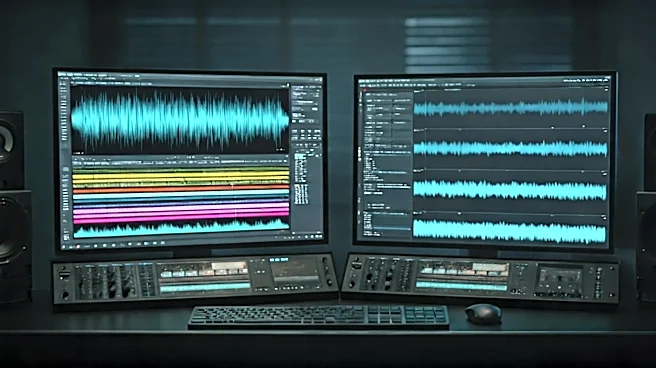
The tools to create these experiences have become incredibly sophisticated. Technologies like Dolby Atmos allow sound designers to place and move individual sounds anywhere in a three-dimensional space, not just through a few fixed channels. A prestige film might use this to make a helicopter fly realistically overhead. An art-house film might use it to place a character’s anxious breathing right behind your own head. The difference is intent. Where prestige sound aims for objective clarity, immersive sound often aims for subjective experience. It weaponizes the off-screen space. In Yorgos Lanthimos’s films, the sound mix is often deliberately unnatural, with jarring foley and unnerving silences that amplify the bizarre reality on screen. It’s not about replicating the real world; it’s about creating a psychological one. This approach trusts the audience to process a complex, sometimes contradictory, audio-visual experience without having their hands held by a dominant musical score.
Why Cannes is the Perfect Litmus Test
So why is Cannes the focal point for this distinction? Because it's a festival that celebrates auteur theory—the idea that a director's personal vision is paramount. The filmmakers showcased here are often those pushing the boundaries of the medium, and sound is one of the most potent frontiers. The festival’s high-end theaters, like the Grand Théâtre Lumière, are equipped with state-of-the-art sound systems that can reveal every nuance, every subtle layer of a complex mix. It’s in these acoustically perfect rooms that the difference between a film with a “good” soundtrack and a film with a truly integrated sonic identity becomes undeniable. The applause at Cannes isn't just for a good story; it’s for audacious craft. When a film like *The Zone of Interest* or Julia Ducournau’s *Titane* wins, it’s a validation of a holistic vision where sound is not just an accompaniment, but a fundamental element of the film’s DNA.