


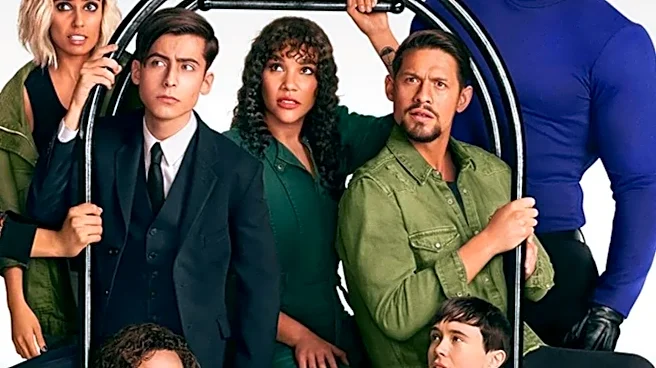
1. The 'Everything Is a Mystery' Trailer
There’s a fine line between intrigue and confusion. Modern trailers, especially for sci-fi and high-concept dramas, often lean so hard into being mysterious that they forget to give the audience a reason to care. A trailer that consists entirely of cryptic
one-liners, characters staring at things off-screen, and a dramatic musical swell tells us nothing about the story, the characters, or the tone. A good preview teases the premise and introduces a compelling conflict; a bad one just presents a series of questions without offering a single emotional or narrative hook to grab onto.
2. Showing the Entire Plot
The polar opposite of the mystery box is the trailer that functions as a two-minute summary of the entire season. These previews give away major plot points, character betrayals, and sometimes even the ending. This often stems from a lack of confidence, as if the network fears audiences won't watch unless they know every major beat in advance. Instead of building anticipation, it kills it. The best gags, the most shocking twists, and the key emotional turns lose their impact when they're used as marketing bullet points, turning the actual viewing experience into a simple exercise in checking boxes.
3. Generic 'Floating Heads' Poster Art
You’ve seen it a hundred times: the cast assembled in a vaguely dramatic pose against a nondescript background, their faces floating in a sterile composition. This key art style is the visual equivalent of Muzak. It’s safe, it’s bland, and it communicates absolutely nothing unique about the show. Whether it's a witty office sitcom or a gritty detective drama, the floating heads poster makes them look identical. Exceptional shows deserve key art that reflects their specific tone, world, and aesthetic, giving potential viewers a genuine taste of what makes the series special, not just a reminder of which actors are in it.
4. Misleading Genre and Tone
Marketing a show as something it's not is a recipe for audience whiplash and disappointment. Promoting a dark, character-driven comedy as a wacky, laugh-a-minute sitcom will attract the wrong viewers and alienate those who would have actually loved it. This often happens when a network tries to fit a unique show into a pre-existing, commercially successful box. Trailers cut with upbeat pop songs for a melancholy drama or ominous, percussive scores for a lighthearted adventure create a fundamental disconnect between the promise and the product, ensuring that almost no one is happy.
5. The Over-Reliance on a Vague Producer Credit
“From a producer of ‘Mega-Hit Show’” is one of the laziest and most meaningless phrases in TV marketing. A producer’s role can range from being the key creative visionary to simply being a studio executive who was tangentially involved. Without a specific name that carries real weight—like a well-known creator, writer, or director—this credit is just empty hype. It implies a level of quality or a similar tone to the previous hit without any guarantee. It’s a borrowed credential that often signals the new show lacks the confidence to stand on its own merits.
6. Using Slow, Somber Covers of Pop Songs
What started as a novel way to create a dramatic mood has become a tired, predictable trailer cliché. Taking an upbeat, recognizable pop song and rendering it as a breathy, minor-key piano ballad is now an instant signal of faux prestige. This musical choice is so overused that it has lost all its power. Instead of making a trailer feel epic and important, it often makes it feel generic and emotionally manipulative. A show's promotional materials are the first taste of its unique voice; relying on a stale musical trend suggests the series itself might not have an original idea in its head.
7. The 'In a World…' Narration Trope
While the literal “In a world…” voiceover has mostly faded, its spirit lives on in trailers that rely on a generic narrator to explain the entire premise in a deep, serious tone. This approach is a classic example of telling instead of showing. It robs the show of the chance to establish its world and characters through its own dialogue and visuals. When a trailer can’t convey its core concept without a disembodied voice explaining it, it suggests the show itself may suffer from clunky exposition. The best previews immerse you in the world, letting the show speak for itself.