




The Intermission Defense
Director Jon M. Chu has been consistent in his reasoning for cleaving the story in two. His argument centers on the stage musical's own structure. 'Defying Gravity,' the show-stopping number that closes Act I, represents a monumental shift for the characters,
especially Elphaba. To rush from that emotional peak into the darker, more politically charged second act, Chu argued, would have been a disservice to the story. He claimed that trying to cram everything into one film would have meant cutting beloved songs and crucial character moments, rendering the final product unrecognizable to fans. For Chu, the intermission wasn't just a break; it was a character transformation that deserved its own space to breathe, a narrative wall that couldn't be vaulted in a single three-hour film.
The Math of the Matter
The numbers, however, tell a more complicated story. The original Broadway production of 'Wicked' runs approximately two hours and 45 minutes, including a 15-minute intermission. The first film, 'Wicked,' clocks in at a staggering two hours and 41 minutes on its own—nearly the length of the entire stage show. 'Wicked: For Good' adds another two hours and 18 minutes, bringing the total cinematic experience to just under five hours. This isn't just a case of giving the story room; it's a massive expansion. To fill that time, the films extend musical numbers, add new dialogue, and incorporate two brand-new songs from composer Stephen Schwartz: 'No Place Like Home' for Elphaba and 'The Girl in the Bubble' for Glinda. This approach directly counters the idea that splitting the film was simply about preserving the existing material.
A History of Halves
Hollywood has a checkered past with the two-part finale. The trend, popularized by 'Harry Potter and the Deathly Hallows,' was born from a desire to do justice to a dense final book. While financially successful, the strategy has often been met with critical weariness. For every 'Avengers: Infinity War' and 'Endgame,' which are often seen as a successful pairing, there's a 'Hunger Games: Mockingjay' or 'Twilight: Breaking Dawn,' where the first part is often criticized for feeling like a feature-length trailer for the finale. These films often suffer from pacing issues, with Part 1 feeling like all setup and Part 2 feeling like an overlong climax. The risk is always that the narrative feels stretched and padded, a decision made in the interest of doubling box office returns rather than serving the story.
The Audience Is the Jury
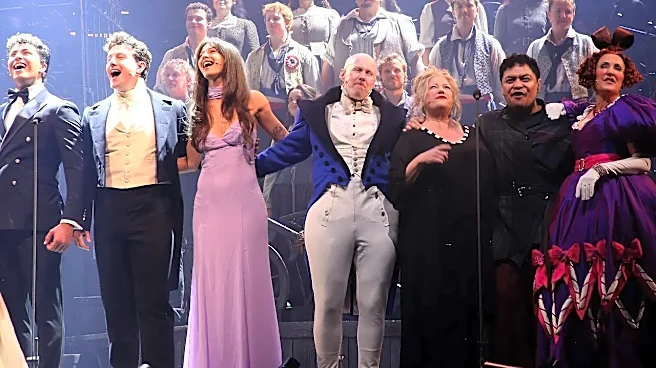
Early reviews for 'Wicked: For Good' suggest it inherited the stage show's biggest imbalance: the second act is darker and less packed with iconic hits than the first. Where Part One soared with recognizable anthems like 'Popular' and 'Defying Gravity,' Part Two is a more somber, character-focused affair. The central performances of Cynthia Erivo as Elphaba and Ariana Grande as Glinda are widely praised as the anchor of the entire project, their chemistry papers over many of the structural issues. Still, critics have noted that the split puts a glaring spotlight on the second half's narrative weaknesses, which are less noticeable during a 15-minute stage intermission than after a yearlong wait. The added material attempts to flesh out the story, but some reviews question if it truly enhances it or just adds bloat.