





The Spectacle of Sprezzatura
First, you have to understand the scene. Pitti Uomo is less a conventional trade show and more a theater of personal style. Photographers swarm the courtyard of the Fortezza da Basso, hunting for men dressed in extravagant, meticulously crafted outfits.
Think double-breasted linen suits in daring shades, wide-brimmed hats, and artfully draped scarves. The guiding principle is *sprezzatura*, an Italian term for studied nonchalance—the art of making something difficult look effortless. It’s a performance, and every detail is a conscious choice. This environment, saturated with visual information, is precisely why the understated watch becomes such a powerful statement. In a sea of loud, everything quiet becomes magnetic.
An Anchor in a Sartorial Storm
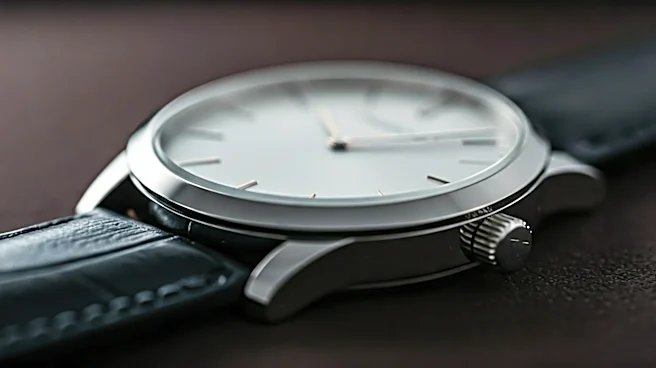
When your entire outfit is designed to turn heads, your accessories must play a supporting role. A loud, oversized, or bling-heavy watch would compete with the tailoring, the fabric, and the color palette. Instead of complementing the look, it would create noise. The truly stylish men at Pitti understand this calculus. They use a simple, elegant dress watch as an anchor. It’s a grounding element, a quiet point of classicism that says, “Yes, I’m wearing a bright yellow suit, but I am still rooted in the traditions of good taste.” A slim, time-only watch on a leather strap doesn’t shout; it whispers. It’s a nod to a heritage that predates seasonal trends, providing a crucial balance to an otherwise flamboyant look.
Confidence, Not Complications
There's a deeper psychological play at work here. Choosing an understated watch in this context is an act of supreme confidence. The wearer isn't relying on a horological marvel with a tourbillon and minute repeater to get noticed. Their personality, their charisma, and the head-to-toe coherence of their outfit are doing the work. The watch isn't a crutch; it's a punctuation mark. It suggests that the wearer’s interest in style is holistic, not just a flex of purchasing power. A man who straps on a simple, vintage Cartier Tank or a Jaeger-LeCoultre Reverso with his bespoke suit is signaling that he has nothing to prove. The value is in the design, the history, and the appropriateness of the piece, not its market price or mechanical complexity.
The Archetypal Choices
So, what are these understated pieces? They often fall into a few key categories. First, there are the iconic, form-driven dress watches: the rectangular Cartier Tank or the reversible Jaeger-LeCoultre Reverso are perennial favorites. Their Art Deco elegance is timeless. Second, you see an abundance of vintage pieces. A 36mm Omega or a classic Patek Philippe Calatrava from the 1960s carries an aura of history and connoisseurship that a brand-new watch can’t replicate. Finally, there are modern minimalist watches from brands like Nomos Glashütte, whose Bauhaus-inspired designs are clean, intellectual, and perfectly suited to the task. What these all have in common is a focus on proportion, legibility, and refined design. They are made to slip discreetly under a shirt cuff, not to dominate the wrist.