



More Than Just a Piece of Glass
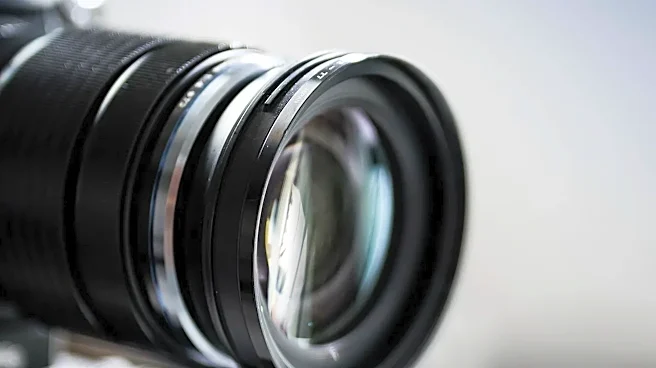
At its core, a camera lens is the eye of the story. Its job is to gather light and focus it onto a sensor, but its real purpose is to shape our emotional experience. A lens doesn't just record what's there; it dictates how we feel about it. The focal
length—the technical term for its angle of view—can make a character feel intimately close or clinically distant. Wide-angle lenses can stretch a room, creating a sense of unease or epic scale, while long telephoto lenses compress space, isolating a character from their surroundings and making them feel either heroic or hunted. This year’s Emmy nominees for Outstanding Cinematography demonstrate that this choice is more critical than ever. In a sea of prestige television, the lens is a Director of Photography’s (DP) primary tool for creating a unique visual signature that stands out to voters.
The Cinematic Sweep of Anamorphic
One of the most significant trends in Emmy-contending shows is the use of anamorphic lenses. These lenses, originally designed to fit a widescreen image onto standard film, create a distinctively cinematic look characterized by a wide aspect ratio, oval background blur (or bokeh), and signature horizontal lens flares. For shows aiming for a grand, film-like feel, anamorphics are the weapon of choice. This visual language is on full display in several 2026 nominated series. Darran Tiernan, for instance, earned a nod for Spider-Noir, where the format helps define the show's stylized, graphic novel aesthetic. Similarly, the cinematographers on shows like Doctor Who and Peaky Blinders have used them not just for the widescreen format, but for the unique character and artifacts they introduce, giving television a texture that feels more expensive and intentional.
Getting Personal with Spherical Lenses
In contrast to the cinematic flourish of anamorphic lenses, spherical lenses project an image without altering its geometry, resulting in a look that can feel more natural and direct. But “natural” doesn’t mean less artistic. In the hands of a master DP, spherical lenses can create profound intimacy and raw energy. Andrew Wehde, nominated for his work on The Bear, uses spherical lenses to get uncomfortably close to his subjects, amplifying the claustrophobia and chaos of the kitchen environment. The look is immediate and visceral, placing the viewer directly inside the pressure cooker with the characters. Likewise, Marcell Rév’s nominated cinematography for Euphoria often relies on the particular character of specific spherical lenses, paired with 35mm film, to craft a world that feels both dreamlike and intensely personal, a masterclass in subjective, emotional lighting.
The Quest for the 'Imperfect' Lens
The competition for an Emmy isn't just about picking the right category of lens; it's an arms race for unique character. Many of today’s top cinematographers are moving away from clinically perfect modern lenses. Instead, they seek out vintage glass or even have lenses “de-tuned” to introduce softness, unpredictable flares, and other “flaws” that give a show its soul. For the nominated series Alien: Earth, DP Dana Gonzales used custom-tuned optics to honor the gritty, industrial aesthetic of the original 1979 film while updating it for a modern audience. This search for imperfection is a direct response to the hyper-sharpness of digital cameras. By reintroducing a bit of analog character, DPs craft a look that feels more tactile, emotional, and, most importantly, distinct from everything else on television—a crucial advantage in any awards race.