



An Economy Without Money
To understand the jewelry, you first have to understand Burning Man’s defining ethos. For one week, a temporary city called Black Rock City rises in the Nevada desert, governed by ten principles. Two of the most crucial are “Gifting” and “Decommodification.”
In this city, money is almost useless. With the exception of coffee and ice, nothing is for sale. Instead, the community runs on a gift culture. This isn’t bartering, where you trade one item for another of similar value. A gift is given freely, with no expectation of receiving something in return. This philosophy is designed to create a social environment free from commercialism, advertising, and consumer transactions, fostering genuine connection and community instead.
The Perfect, Portable Gift
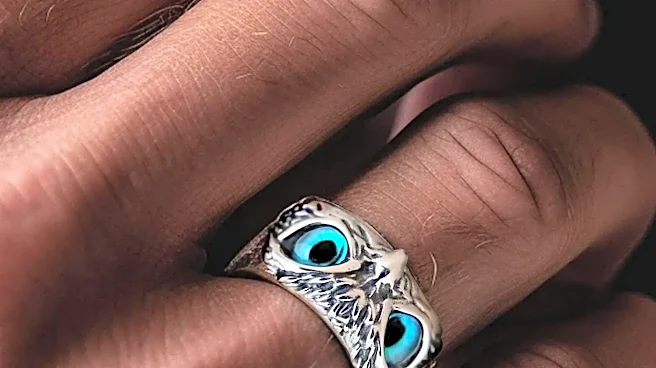
In an environment where participants must be radically self-reliant—bringing all their own food, water, and shelter—gifts need to be thoughtful. You can’t exactly hand out bulky items. This is where jewelry found its perfect niche. Small, durable, and easy to carry, a handmade necklace, pendant, or bracelet became an ideal token. It requires creative effort to make but little effort for the recipient to accept and keep. Gifting can be an experience, a song, or a helping hand, but physical objects often serve as powerful reminders of a connection made. Jewelry, being wearable, carries that memory long after the dust has settled and the event is over, turning a fleeting moment into a lasting souvenir of an interaction.
Radical Self-Expression in Metal and Glass
The jewelry itself is as diverse and creative as the people who make it. This ties into another core principle: “Radical Self-Expression.” The pieces range from simple, laser-cut wooden pendants bearing the festival’s iconic symbol to intricate metalwork, blown-glass medallions, and found-object art. Some artists, including professional jewelers, spend months designing and producing hundreds of pieces to give away. Others host workshops in their camps, teaching fellow attendees to make their own resin pendants or other wearable art, embodying the principle of “Participation.” The materials are often humble—recycled metals, wood, ceramics—but the intent behind them is rich, representing a labor of love offered freely to the community.
A Culture That Lives On
The tradition of gifting jewelry has become so ingrained that it's been documented in books and museum exhibits, such as "The Jewelry of Burning Man" and the "Playa Made" exhibition at the Fuller Craft Museum. These projects celebrate the makers and preserve the stories behind the pieces, highlighting how a subculture of craft became a defining feature of the event's identity. The influence doesn't stop at the desert's edge. The aesthetic has trickled into mainstream fashion, and some artists who started by gifting their work have gone on to build small businesses, carefully navigating the line between Burning Man’s decommodified ethos and the outside world. This reflects a central, productive tension within the culture: how to keep the spirit of the gift alive in a world dominated by commerce.