







The Age of Cosmic Exhaustion
Let’s be honest: there’s a sense of fatigue setting in. For years, the blockbuster formula has been to escalate. If one movie threatens a city, the sequel must threaten a country, and the threequel must put the entire galaxy on the chopping block. The
result is a narrative landscape cluttered with god-like villains, reality-bending weapons, and heroes who prevent armageddon before their lunch break. This phenomenon, often dubbed 'superhero fatigue,' is less about the heroes themselves and more about the repetitive, overwhelming scale of their conflicts. When every story is about everything ending, the audience can become desensitized. The threat becomes abstract, a CGI light show in the sky that we know, deep down, the heroes will inevitably stop. The tension deflates because we've seen this movie before, and we know the world doesn't actually end.
Connection Is the Real Currency
This is where the friendship plot comes in. What’s at stake if two friends have a falling out? On paper, nothing compared to universal destruction. But emotionally, it’s everything. Small-scale, personal stories operate on a currency of emotion that is far more relatable and often more potent. We may not know what it’s like to stop a black hole from consuming Earth, but we all know the pain of a broken friendship, the joy of a shared secret, or the quiet loyalty of someone who has your back. These character relationships are the heartbeat of a story, injecting it with an emotional depth that grand spectacles often lack. When we see our own experiences mirrored in the interactions between characters, we form a connection that a world-ending threat can’t replicate on its own.
Hiding the Personal Inside the Planetary
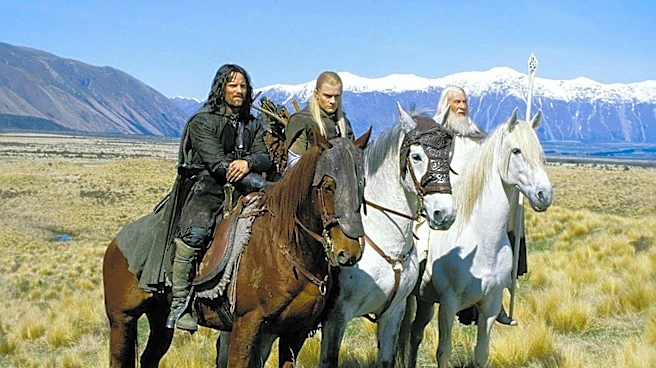
The secret is that the best “planetary stakes” stories are actually just friendship plots in disguise. Think of The Lord of the Rings. Yes, the fate of Middle-earth is on the line, but the story’s unforgettable core is the unwavering loyalty between Frodo and Sam. Their journey provides the emotional anchor for the entire epic. Consider the original Star Wars trilogy. We came for the space battles, but we stayed for the chemistry between Luke, Han, and Leia. The soul of the story isn't about destroying the Death Star; it's about a farm boy, a princess, and a scoundrel learning to trust and fight for one another. The world-ending stakes are simply the crucible that forges and tests these bonds. Without that personal, emotional core, the spectacle is empty. The most successful large-scale narratives use the epic backdrop to make the small, personal stories feel even more significant.
In Defense of Just Hanging Out
Beyond the epics, there's a quieter, purer joy in stories where the relationships are the entire plot. From classic sitcoms built around a group of friends in a coffee shop to slice-of-life dramas, these narratives understand that the simple act of people navigating their lives together is inherently compelling. They prove that you don’t need a doomsday clock to create tension. The stakes can be as simple as, “Will they make up after their argument?” or “Can they support each other through a tough time?” These stories are resonant because they reflect our own lives. Our lives are not typically defined by averting global catastrophes, but by the network of relationships we build, maintain, and sometimes lose. These stories matter because they affirm that those connections are, in themselves, a world worth saving.