








More Than Just Sequins
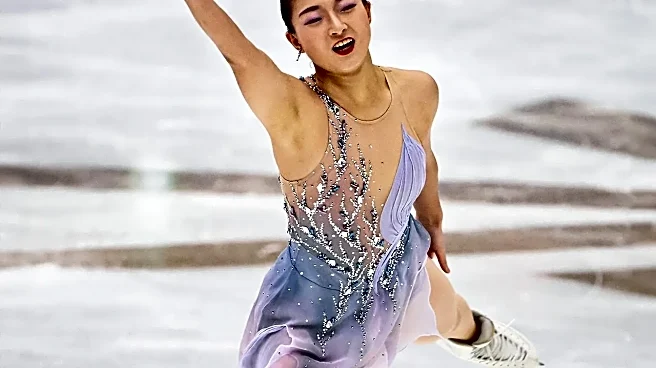
To the casual viewer, a figure skating costume is a swirl of color and sparkle, an accessory to the main event. In reality, it's a critical piece of sporting equipment that can make or break a performance. Every costume is a storytelling tool, designed
to visually interpret the music and convey the program's theme, whether it’s the tragic romance of 'Romeo and Juliet' or the bold energy of a modern rock anthem. Designers listen to the music repeatedly before ever sketching, ensuring the outfit enhances the skater's movements and character. Yet, this artistic expression must coexist with extreme athleticism. A costume that is too heavy, restrictive, or ill-fitting can disrupt a skater’s balance on a quadruple jump or snag during a rapid spin. A single loose bead can even lead to a point deduction, a devastating outcome in a sport decided by razor-thin margins.
The Fabric of Champions
The evolution of figure skating costumes mirrors the evolution of fabric technology. The heavy wools of the early 20th century, worn for warmth in outdoor rinks, have been replaced by advanced synthetic materials. The game-changer was the introduction of stretch fabrics like Lycra and spandex. These materials offer the four-way stretch necessary for skaters to bend, jump, and extend their bodies without restriction. Today's designers utilize a sophisticated palette of lightweight materials. Power mesh provides structure and the 'illusion' of bare skin without violating modesty rules, while delicate chiffons are used in skirts to enhance the feeling of flow and movement across the ice. The goal is to create a streamlined silhouette that is both breathable and secure, allowing for complete freedom of movement while weighing as little as possible. For elite female skaters, a dress might weigh less than 350 grams.
Engineered for Flight
Beneath the beauty lies a feat of engineering. A competitive costume must withstand incredible physical forces. Seams are reinforced, closures must be foolproof, and every element has to stay perfectly in place through high-speed rotations and powerful landings. Fashion designers like Vera Wang, herself a former competitive skater, understand this intimately, noting that a wardrobe malfunction can ruin an athlete's Olympic dream. This has led to a deep collaboration between skaters, coaches, and designers, sometimes even including renowned fashion houses like Oscar de la Renta, to create garments that are essentially custom-built athletic armor. The fit must be precise, often tailored to the millimeter to follow the lines of the body and support the athlete's physique without any hindrance. This technical precision ensures the costume moves as a second skin, supporting the performance rather than becoming a distraction.
The Strategic Art of Sparkle
The iconic sparkle of a skating dress is no longer just about glamour; it’s a science. The heavy glass beads and sequins of past decades have been replaced by thousands of lightweight, Swarovski-style crystals that are heat-pressed onto the fabric. This method ensures they are secure and add minimal weight. The placement of these embellishments is a strategic decision. Designers use clusters of crystals to highlight a skater's elegant lines, create texture, and catch the arena lights to magnify the impression of speed and rotation. However, they must be careful not to overdo it. Asymmetrical designs with heavy beading on one side can subtly throw off a skater's center of gravity during a jump. The ultimate goal is to find the perfect equilibrium: creating a dazzling visual impact that amplifies the artistry without compromising the technical execution that wins medals.