


The Physics Problem of Water
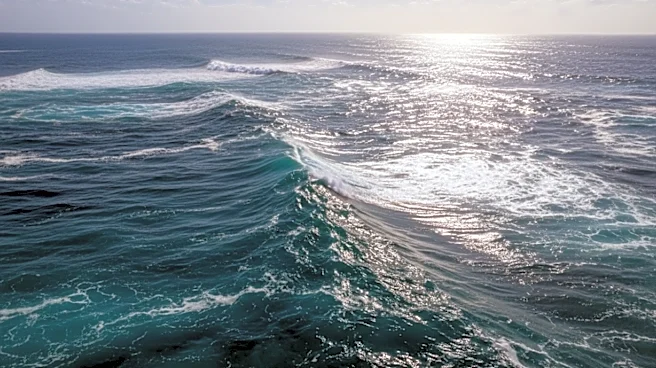
Before you can give water a personality, you have to make it look like… well, water. And that’s incredibly hard. Real-world water is a chaotic mess of physics. It reflects light, refracts it, absorbs it, and is transparent all at once. It moves in unpredictable
ways, governed by the complex rules of fluid dynamics. Animating it frame-by-frame like a classic cartoon character is impossible. Instead, VFX artists rely on computational fluid dynamics (CFD), a field of mechanics that uses numerical analysis to solve for how liquids and gases flow. This means that every drop, splash, and ripple isn't just drawn; it's calculated. The computer has to simulate how countless individual particles interact with each other and the environment, a process that is immensely computationally expensive.
Simulation vs. Performance
The key to digital water lies in simulation, not traditional animation. Artists use powerful software like Houdini to run what are known as fluid solvers. Think of it like setting up a digital science experiment: artists define the properties of the water (its viscosity, for example) and the forces acting on it (like wind or a breaching sea creature), and the solver calculates the result. For a film like Avatar: The Way of Water, this involved creating entirely new water toolsets to handle thousands of shots, from massive ocean surfaces down to the individual droplets on a character’s skin. The challenge is that a pure physics simulation is just that—physical. It doesn't have motivation or emotion. The water will behave realistically, but it won't necessarily perform. That's where the artistry begins.
Directing Liquid Chaos
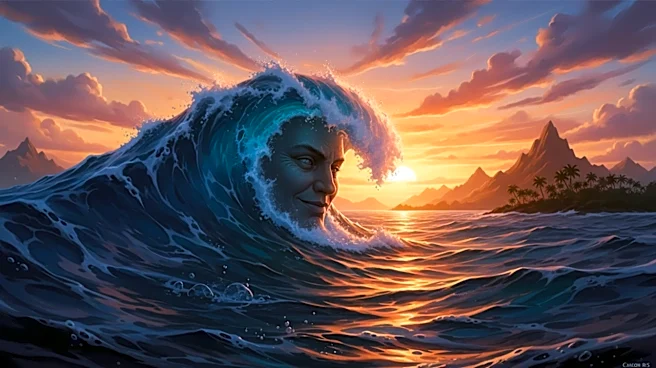
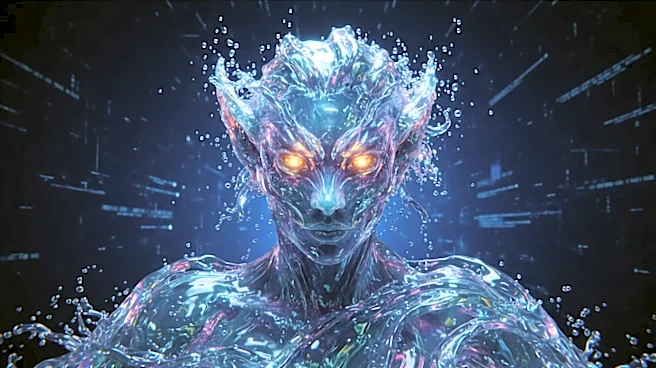
Giving water a personality, as seen with the ocean in Disney's Moana, requires a clever blend of simulation and control. Animators can't just tell a billion water particles to “act friendly.” Instead, they create a kind of digital puppet. For Moana, the character animation department would first animate a simple shape, like a sock puppet, to block out the ocean’s performance—a playful wave or a high-five. This performance was then handed to the effects department, who would run fluid simulations over the surface of that shape to make it look and behave like real water, adding splashes and bubbles. This hybrid approach allows a director to guide the chaos. Artists can introduce invisible forces or constraints within the simulation to coax the water into forming a specific shape or moving with a certain intention, all while trying to keep the underlying physics believable.
The Render Nightmare
After all the simulation and artistic direction, the final hurdle is rendering—the process of turning the 3D data into a final 2D image. Water is notoriously difficult to render because of its transparency and interaction with light. The computer has to calculate how light rays bounce, bend through the water (refraction), and reflect off its surface. It also has to handle complex secondary elements like foam, mist, and underwater bubbles, which often require their own separate simulations. This process is so intensive that a single complex water shot can take days or even weeks to render, even with massive data centers known as render farms. The water effects in Avatar: The Way of Water involved 2,225 shots, with some simulations for fine details like water running over skin taking eight days to compute for a single iteration.