
An Unwanted Passion Project
Every film is a battle, but Paul Haggis’s Crash was a war fought on all fronts. The script, a self-described “passion piece” for Haggis, was inspired by his own real-life carjacking in 1991. For years,
the story—a sprawling narrative about interconnected lives and racial tensions in Los Angeles—was a tough sell. Haggis and his co-writer Bobby Moresco initially pitched it to television networks, who deemed it too controversial. Even as a film, no one wanted to finance it. Haggis recalled telling Moresco, "I've got this story… no one's ever going to pay us to write it and once it's done no one's ever going to make it." This lack of studio belief set the stage for a production defined by scarcity, forcing the filmmakers into a corner before the cameras even rolled.
A Production on the Brink
The film was eventually greenlit with a shoestring budget of just $6.5 million, a tiny sum for an ensemble drama featuring stars like Sandra Bullock, Matt Dillon, and Brendan Fraser. Actor Don Cheadle, who plays Detective Graham Waters, became so integral to the film's survival that he also took a producer credit, helping hold the fragile project together. The shooting schedule was brutally tight—just 35 days to capture the sprawling story across numerous Los Angeles locations. Haggis himself admitted they were filming seven to ten pages of script a day, a frantic pace compared to the typical two or three. He described being "terrified" throughout the process, driven by the fear that he wouldn't get what he needed in the can or that the story simply wouldn't work.
Grit and Realism by Necessity
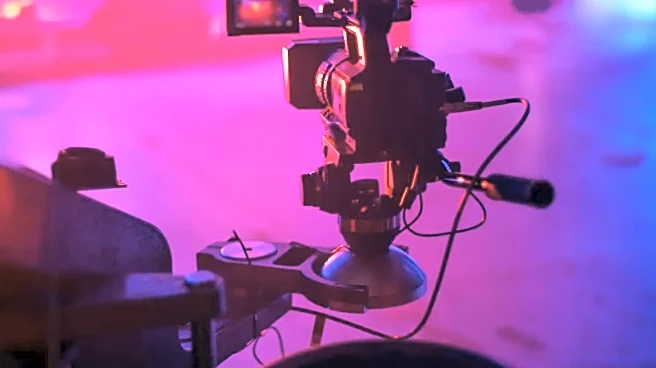
This is where the "production crisis" became a creative blessing. With no money for glossy visuals or extensive CGI, Haggis and his cinematographer, J. Michael Muro, had to lean into a raw, documentary-like style. The film's aesthetic—the handheld cameras, the imperfect framing, and the feeling that you are right there on the chaotic streets of L.A.—wasn't just an artistic choice; it was a solution. Haggis used his own house for the interiors of the Cabot home to save money. The visceral, unsettling feeling that permeates the film is a direct result of these limitations. The lack of resources forced a realism that made the story’s themes of disconnection and sudden, violent connection feel more authentic. The grit wasn't applied, it was earned.
The Car Crash as Filmic Metaphor
The movie’s central motif is the car crash, a literal interpretation of its title and a metaphor for the characters' collisions. These scenes were executed with practical effects, prioritizing real stunts and in-camera action over digital creations. Consider the pivotal scene where Officer Ryan (Matt Dillon) pulls Christine Thayer (Thandiwe Newton) from a flaming, overturned car. The tension is palpable because what you’re seeing feels real—the twisted metal, the threat of fire, the raw physicality of the rescue. This commitment to practical effects grounds the film’s high-concept premise. The characters are isolated in their “metal and glass” boxes, only to be violently thrown together. By staging these moments with a visceral, practical reality, the film made its philosophical points about human connection—or the lack thereof—land with the force of an actual impact.