




From Banquet Hall to Broadcast Powerhouse
The first CMA Awards in 1967 was a non-televised industry dinner in Nashville. Eddy Arnold took home the inaugural Entertainer of the Year award in a ceremony that was about peer recognition, not national spectacle. That changed in 1968 when the event
was first broadcast on NBC, hosted by Roy Rogers and Dale Evans. This move brought country music directly into American living rooms, making the CMA Awards the longest-running annual music awards program on network television. This initial step onto the small screen was crucial, setting the stage for country music's ascent into the mainstream.
A Mirror to a Changing America
Over its 60-year history, the show has served as a cultural barometer. In 1972, Loretta Lynn made history as the first woman to win Entertainer of the Year, a landmark moment for female artists in the genre. In 2001, just weeks after 9/11, Alan Jackson debuted 'Where Were You (When the World Stopped Turning),' providing a moment of collective catharsis for a grieving nation. And in 2009, a 19-year-old Taylor Swift became the youngest-ever Entertainer of the Year winner, signaling a seismic shift toward a new generation of country-pop crossover stars. These moments weren't just about music; they reflected and shaped the national conversation.
Launching Legends and Creating Icons
A key part of the CMA Awards' legacy is its power to create superstars overnight. In 2015, Chris Stapleton, then a respected but behind-the-scenes songwriter, delivered a show-stopping performance of 'Tennessee Whiskey' with Justin Timberlake. He swept his nominated categories that night, transforming into a household name by morning. Decades earlier, Barbara Mandrell's back-to-back Entertainer of the Year wins in 1980 and 1981 made her the first artist to achieve the feat, solidifying her legendary status. The CMA stage has consistently been a launchpad, turning critical acclaim from industry peers into widespread public adoration.
The Evolution of Country's Sound
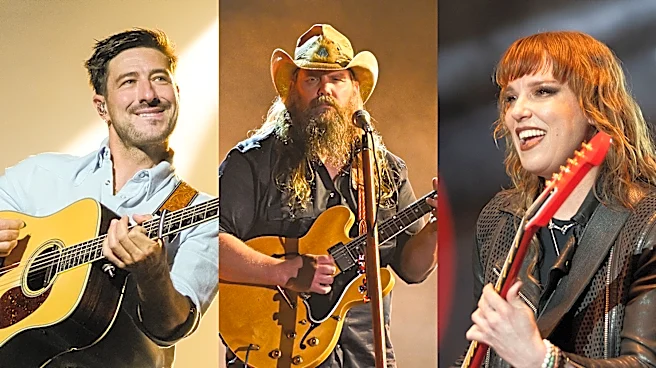
The awards have also chronicled the genre's sonic evolution. The show has reflected every major shift, from the outlaw movement challenging the Nashville sound to the stadium-sized spectacle of Garth Brooks, who dominated the 90s. The crossover success of artists like Shania Twain and the Dixie Chicks marked another definitive era. More recently, the lineup for the 60th awards—featuring artists from Lainey Wilson to Chris Stapleton—highlights a genre that continues to blend rock, pop, and traditional roots. The ceremony acts as an annual report on the state of country music, showcasing its ever-expanding boundaries.
An Anchor in a Fractured Media Landscape
In an age of streaming and fragmented audiences, a live television event that has aired for nearly 60 consecutive years is a rarity. While viewership for all awards shows has declined from historic peaks, the CMAs remain a significant broadcast draw, often ranking as the top program of the night. The extension of its broadcast contract with ABC and the addition of a simulcast on Disney+ underscore its enduring value. At 60, the show is not just a relic; it's a testament to the staying power of event television and the unwavering loyalty of the country music fanbase.