


A Director's Triumphant Return
The feeling that Amadeus was destined for greatness began with its director, Miloš Forman. The film represented a profound homecoming for the Czech-born filmmaker, who had fled his homeland for America following the Soviet invasion of 1968. Returning
to Prague to helm a major American production was a complex and politically charged victory. For the government, it was a chance to secure much-needed Western currency; for Forman, it was a chance to work in the city he knew intimately, with its preserved 18th-century architecture providing a level of authenticity no Hollywood backlot could ever hope to match. This personal resonance infused the entire production with a sense of purpose. The cast and crew were not just making a film; they were participants in a significant cultural and personal event, witnessing a master director reclaim his artistic territory on his own terms. This backdrop of historical weight gave every day of filming an undercurrent of importance.
Prague as the Perfect Co-Star
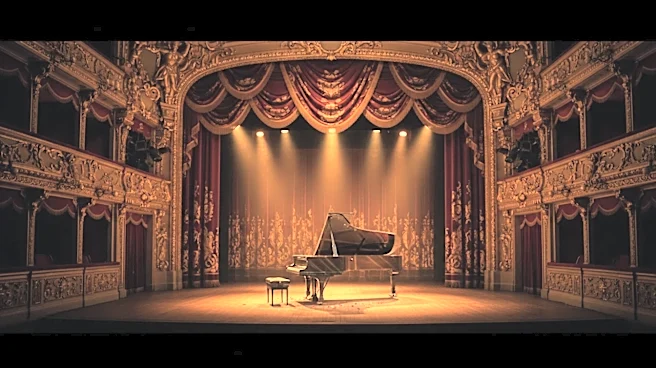
The decision to shoot in Prague was arguably the single most important element in creating the film's transportive magic. Unlike Vienna, where much of the story is set, Prague had been largely untouched by modern development, its cobblestone streets and historic buildings appearing almost exactly as they had in Mozart's time. The production was able to use real locations like the Estates Theatre, where Mozart himself had conducted the premiere of Don Giovanni. This meant the actors weren't performing on meticulously constructed sets but walking through history. They were immersed in the world of the film in a tangible way, wearing period costumes in the very halls and opera houses that their characters would have known. This authenticity was a powerful force, lending a verisimilitude to the performances that the cast could feel in their bones. It eliminated the need for imagination in a key way—the world was already there, living and breathing around them.
Mozart and Salieri in the Flesh
At the heart of the film is the titanic rivalry between Wolfgang Amadeus Mozart and Antonio Salieri, and the casting of Tom Hulce and F. Murray Abraham was lightning in a bottle. Hulce brought a chaotic, punk-rock energy to his Mozart, complete with that unforgettable, high-pitched giggle. Abraham, in contrast, embodied Salieri’s simmering jealousy with a quiet, devastating intensity. Their off-screen relationship was reportedly one of professional distance rather than outright animosity, but their different approaches to acting created a palpable on-screen tension. In one famous instance during the climactic dictation scene, Hulce intentionally skipped ahead and changed lines to keep Abraham genuinely off-balance, perfectly capturing Salieri’s struggle to comprehend Mozart's genius in real-time. Even the casting of Constanze Mozart was touched by fate; Elizabeth Berridge was flown to Prague for a last-minute audition and won the part only after the original actress, Meg Tilly, suffered a freak leg injury. These dynamics, both planned and accidental, fostered an environment of electric creativity.
Living Inside the Music
In Amadeus, the music is not just a score; it is the main character, the language of genius that Salieri understands better than anyone and covets with all his soul. Forman made the brilliant decision to have Mozart’s compositions be an active part of the filming process. The music was often played live on set, with scenes choreographed and paced to the soaring symphonies and operatic arias. The actors weren’t just reacting to a story; they were reacting to some of the most sublime music ever composed, letting its emotional power guide their performances. F. Murray Abraham has spoken of how Salieri was the only one in the court who could truly grasp the divine nature of Mozart’s work. This immersion allowed the entire cast to connect with the material on a deeper, more primal level. They could feel the stakes of the story through the music itself, reinforcing the sense that they were channeling a story of profound artistic conflict.