






The 'Golden Generation' That Stays Silver
Every few years, a narrative builds around the USMNT: this is the 'Golden Generation'. With a roster dotted with players from top European clubs, the hype suggests this is the team that will finally break through. They play with flair in the group stage,
generating genuine belief, only to fall short when the lights are brightest, as they did in a dispiriting 4-1 loss to Belgium in the 2026 Round of 16. This story is painfully familiar to fans of England's national soccer teams of the 2000s, which featured superstars like Beckham, Gerrard, and Lampard but never advanced past a quarter-final. These teams, burdened by immense expectations, prove that a collection of brilliant individuals doesn't automatically create an unbeatable whole. The talent is undeniable, but the final, trophy-lifting step remains agonizingly out of reach.
The Heartbreaking 'Almost' Moment
American sports history is littered with teams defined not by victory, but by a single, catastrophic moment of failure. For football fans, it’s the Buffalo Bills of the early 1990s, a team that reached four consecutive Super Bowls only to lose every single one. The first loss, a missed field goal known simply as 'Wide Right,' became a symbol for the franchise's cursed luck. The USMNT has its own version of this. While not a single play, their tournament exits often feel like a rapid series of unfortunate events that compound into collapse. Whether it's a questionable refereeing decision, a defensive lapse, or a star player fading at the crucial moment, the U.S. often finds itself on the wrong side of the thin margins that separate victory from defeat in knockout soccer. It's the same feeling of inevitability that plagued the Cleveland Browns in the 1980s, who lost back-to-back AFC Championships to John Elway's Broncos on soul-crushing last-minute drives.
The Curse of the Perennial Underdog
For generations, the Chicago Cubs were baseball’s most famous lovable losers, supposedly hexed by the 'Curse of the Billy Goat' in 1945. For 71 years, every season ended in disappointment, a narrative that bonded fans in shared misery until their miraculous win in 2016. The USMNT occupies a similar space on the world stage. They are the eternal underdog against global powerhouses, a role that makes their victories euphoric and their losses sting with the bitterness of a curse. While nobody has (yet) brought a goat to a USMNT match, the structural disadvantages feel just as potent. American soccer has long struggled with a pay-to-play youth system that excludes potential talent and a mainstream sports culture that prioritizes football and basketball. This creates a team that often plays with a chip on its shoulder, fighting an uphill battle against nations where soccer is a cultural institution, not just another sports option.
Relying on a Star Who Can't Do It Alone
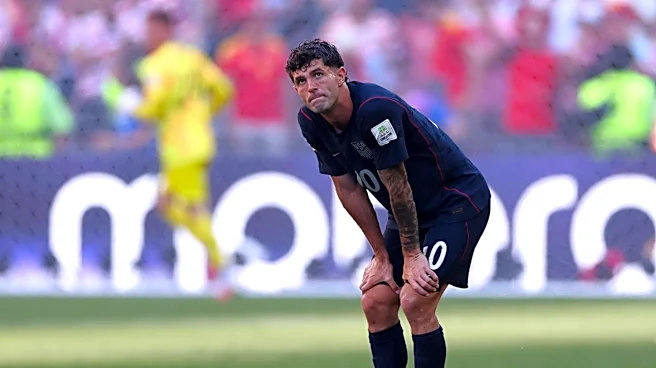
Sometimes, a team's hopes are pinned so heavily on one superstar that their fate rises and falls with his performance. In basketball, this is the story of many great players on teams without a strong enough supporting cast to win a championship. For the USMNT, Christian Pulisic has carried that weight for years. When he plays well, the team seems capable of anything. When he is isolated, injured, or simply has a bad game, the entire system can look lost. The 2026 exit against Belgium was a prime example, where key players struggled to make an impact against a more cohesive unit. It mirrors the NBA sagas of superstars who put up incredible individual numbers but were consistently bounced from the playoffs by deeper, more balanced opponents. It’s a recurring lesson: in team sports, one hero is rarely enough to conquer the world.