
The Blueprint in the Beat
For the parent, likely a Gen X-er or elder millennial, the sound is a time machine. When a new-school artist performs over a beat, the parent might hear the ghost of what came before: the crisp drum break from James Brown's “Funky Drummer” or the soulful
melody lifted from a 1970s Isley Brothers track. These samples are the original DNA, the foundational blocks they first heard on groundbreaking records by A Tribe Called Quest or Wu-Tang Clan. To them, the new track is a conversation with history. The child, however, hears something completely different. They aren't hearing the crate-digging legacy; they’re hearing the immediacy of a trap beat or a drill rhythm. The sample isn’t a reference, it’s just texture—the familiar sonic wallpaper of the current moment, as native to their ears as the melodic autotune flowing over it. They are hearing the final product, not the family tree.
A Different Kind of Story
The divide extends deep into the lyrical content and flow. A parent listening to a tribute performance might be waiting for the intricate, multi-syllable rhymes and dense storytelling that defined hip hop's golden age. They grew up on the socially conscious narratives of Public Enemy and the cinematic crime tales of Nas. For them, greatness is often measured in lyrical complexity and the power of a message. Their child, on the other hand, has a different rubric. They’ve grown up in an era where melody, vibe, and ad-libs are just as crucial as the words themselves. They appreciate the hypnotic, triplet flows of Migos or the atmospheric, mood-setting vocals of an artist like Travis Scott. It’s not that the lyrics don't matter, but the focus has shifted. The story is often told through emotion and sonic texture rather than explicit narrative, a change that can leave an older listener feeling like they've missed the point, while the younger one is completely immersed.
The Visual Echo Chamber
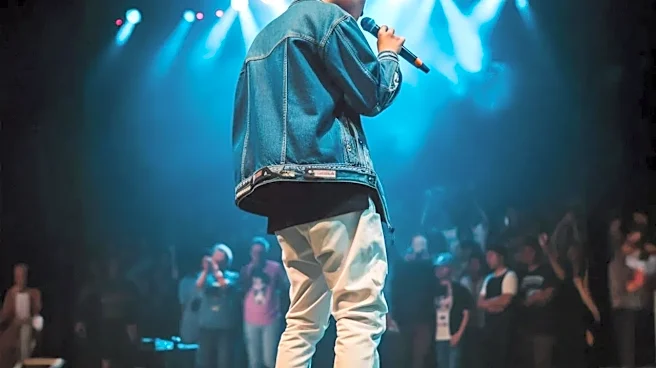
It’s not just the sound. Hip hop has always been a full-contact culture of style, language, and attitude. When a contemporary star hits the stage, the parent might see echoes of the past. The baggy silhouette of a designer outfit could remind them of 90s streetwear; a particular dance move could be a subtle nod to an iconic music video from their youth. They see a lineage. The child sees what’s trending on TikTok and Instagram. They don’t have the historical context to see the through-line from Salt-N-Pepa's iconic style to Cardi B's modern glamour, or from the early park jams in the Bronx to a massive festival stage. To them, the artist’s persona and style feel entirely new and self-contained, a product of right now. The generational gap isn't a failure to communicate; it's a testament to how deeply hip hop has integrated itself into the fabric of American life, creating new languages with each generation.
A Bridge, Not a Battle
The most fascinating part of this phenomenon is that it’s not necessarily a source of conflict, but a sign of the genre’s unparalleled success. For decades, intergenerational debates have been framed as “old heads” versus the “new school.” But what’s happening now is different. Hip hop is no longer just a youth culture; it’s a family culture. The performance doesn't create a divide so much as it reveals the layers of a shared history. The parent can point to the screen and say, “You hear that? It comes from this.” The child can respond, “But listen to what they did with it.” The performance becomes a living document, an artifact that invites conversation. It confirms that the Ship of Theseus is still sailing; even if all the planks have been replaced over 50 years, it remains fundamentally hip hop, reflecting the world as it is now, just as it did then.