






Every year, the debate rages: Is 'Die Hard' a Christmas movie? But that's the wrong question. A better way to look at holiday films is to separate the ones that use Christmas as a simple backdrop from those where Christmas is the entire point.
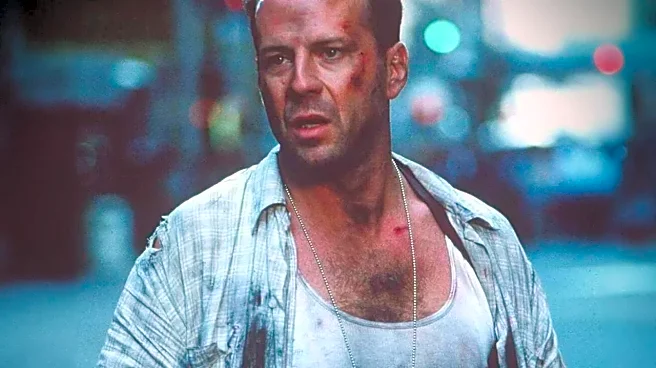
Die Hard (1988)
The classic
test case. Yes, it happens on Christmas Eve at an office party. But swap the holiday for a different corporate event, and the plot remains identical. John McClane is there to see his estranged wife, Holly, but the terrorists aren't motivated by Christmas, and the film's core themes are survival and heroism, not yuletide redemption. The holiday is wallpaper—excellent, explosive wallpaper, but wallpaper nonetheless. This is the quintessential 'Christmas Setting' movie.
It's a Wonderful Life (1946)
Here, the theme is everything. George Bailey's crisis of faith happens on Christmas Eve, and the entire film builds toward a Christmas miracle. His story is about community, sacrifice, and recognizing one's value—all themes amplified by the season of giving and reflection. Without Christmas, George is just a desperate man; with it, his redemption becomes a universal holiday parable. This is a pure 'Christmas Theme' film.
Lethal Weapon (1987)
Screenwriter Shane Black loves Christmas, and it shows. The film opens to 'Jingle Bell Rock' and features a drug bust at a Christmas tree lot. The holiday setting provides a stark, ironic contrast to Martin Riggs's suicidal despair. But the film's climax is what pushes it slightly toward theme: Riggs, a lonely man, chooses life by joining the Murtaugh family for Christmas dinner, resolving his emotional arc through holiday connection. It’s mostly setting, but with a strong thematic payoff.
Home Alone (1990)
If Kevin McCallister were left behind during a summer vacation, it would just be a story about neglect. Being forgotten at Christmas makes it a tale of family, forgiveness, and festive chaos. The entire plot is driven by the holiday rush. The themes of loneliness (Kevin and his neighbor Marley) and the ultimate desire to be with family for Christmas are central to the story's emotional weight. The traps are fun, but the heart of the movie is pure 'Christmas Theme'.
Gremlins (1984)
A Mogwai is a Christmas gift that goes horribly wrong, unleashing chaos on a picture-perfect small town. The film uses the holiday setting to satirize Christmas commercialism and the forced cheer of the season. Kate's famously dark monologue about why she hates Christmas grounds the film in real-world holiday sadness. It's a horror-comedy in a Christmas setting, but its themes are deeply tied to the pressures and anxieties the holiday can create.
Iron Man 3 (2013)
Another Shane Black script, another Christmas setting. Tony Stark tests new armor to a jazz version of 'Jingle Bells' and references 'A Christmas Story'. Marvel has argued its themes of a man repenting for past mistakes give it a Christmas spirit. However, the plot about a terror threat and a new technology could happen at any time of year. Tony's personal crisis is post-Avengers PTSD, not a holiday-induced reckoning. This is a superhero film that just happens to occur in December.
Elf (2003)
This movie could not exist without Christmas. It is the theme, the plot, and the entire reason for being. Buddy is a human raised by elves who travels to New York to meet his biological father and, in the process, save Christmas by restoring city-wide belief in Santa. Every joke, character, and conflict is filtered through the lens of holiday spirit clashing with modern cynicism. It’s the ultimate example of a film driven entirely by 'Christmas Theme'.
While You Were Sleeping (1995)
Lucy, a lonely transit worker, saves her crush on Christmas Day, leading to a series of escalating misunderstandings. The holiday setting is crucial because it heightens her isolation and her desperate desire for the warmth and connection of the family she accidentally joins. The story is about finding your real family, a theme made more powerful by the fact that it unfolds between Christmas and New Year's, a time when loneliness feels most acute. It's a romance where the 'Christmas Theme' of togetherness is the real love story.
Eyes Wide Shut (1999)
Stanley Kubrick’s final film uses Christmas in almost every frame, but not for warmth. The twinkling lights and decorated trees create a surreal, dreamlike backdrop for Dr. Bill Harford's psychological and sexual odyssey through a nocturnal New York. The holiday's wholesomeness provides a deeply ironic contrast to the film's themes of marital jealousy, secret societies, and hidden desires. Christmas here isn't the point; it’s the unsettling, sterile 'Setting' against which a dark anti-Christmas story unfolds.
You've Got Mail (1998)
This rom-com remake of 'The Shop Around the Corner' (a classic Christmas film) unfolds over several seasons, but the emotional core of the movie takes place during the winter holidays. Christmas in New York provides the romantic, and slightly melancholic, backdrop as Kathleen Kelly's small bookstore faces closure. The holiday scenes highlight the bittersweet feeling of nostalgia and financial pressure, making the eventual romance feel earned. It's a borderline case, but the Christmas section is where the story's heart is, leaning it gently toward 'Theme'.