

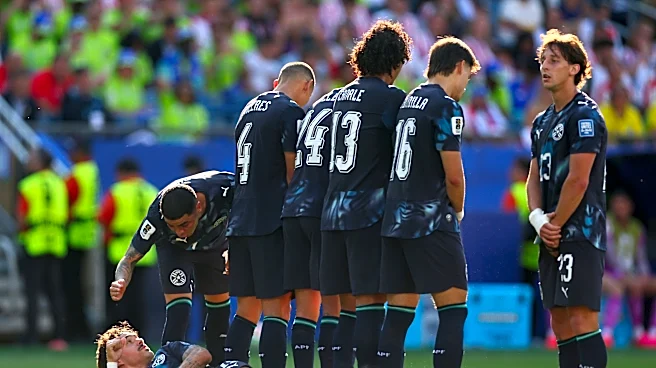


The Art of Organized Chaos
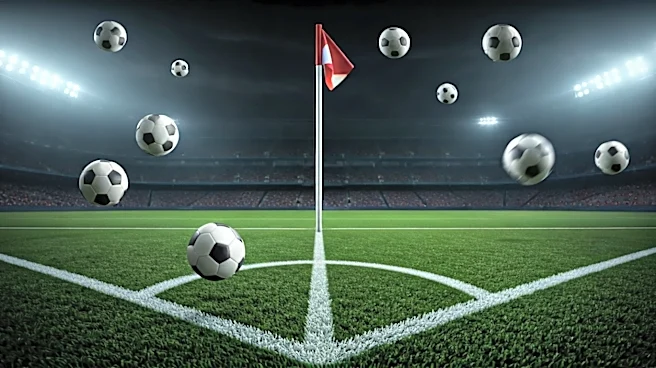
Elite set-piece teams don't just hope for the best when they line up for a corner or free kick; they execute a meticulously planned strategy. The primary goal often isn't to score directly from the first ball, but to manufacture chaos. Teams use pre-rehearsed
routines involving blockers, decoys, and synchronized runs to disrupt a defense's structure. A well-placed player can screen a defender, preventing them from attacking the ball, while another player makes a decoy run to the near post, dragging markers with them and opening up space elsewhere. This isn't about luck; it's about creating specific, repeatable patterns designed to pull organized defenses apart and create high-percentage opportunities. The delivery of the ball itself is varied—sometimes a fast, low inswinger aimed at the six-yard box, other times a floated ball to the back post—to keep defenders guessing and prevent them from getting comfortable.
Winning the Second Ball
Many of the most successful set-piece goals don't come from the initial header. They come from the second ball—the loose ball that drops after a deflection, a block, or a partial clearance. Specialist teams treat this phase with as much importance as the initial delivery. They strategically position players on the edge of the penalty area, anticipating where a clearance is likely to go. Their job is to react faster than the recovering defenders, who are often scrambling to reset their line. By winning the second ball, a team can sustain the attack, force another save, or find a new angle for a shot or cross before the defense has a moment to breathe. This transforms a single set-piece into a sustained wave of pressure, pinning the opposition deep in their own territory and compounding their fatigue.
The Psychological Warfare
The pressure created by set-pieces is as much mental as it is tactical. Facing a team that is a constant threat from dead-ball situations takes a psychological toll. Each corner or free kick conceded feels like a significant event, raising the anxiety levels of the defending team. Defenders know they are facing a rehearsed and dangerous routine, which can lead to hesitation and miscommunication. This constant state of high alert is draining. Over the course of a 90-minute match, the cumulative effect of defending multiple well-drilled set-pieces can lead to mental errors. A defender might lose concentration for a split second, a goalkeeper might misjudge the flight of the ball, or a marker might get pulled out of position—and that is often the exact moment a set-piece team is waiting to exploit.
More Than Just Corners
While corners and free kicks near the goal get the most attention, a truly dominant set-piece team weaponizes every dead ball. A long throw-in, for example, can be just as dangerous as a corner when delivered with pace and accuracy into the penalty area. Teams with a long-throw specialist can effectively create a scoring chance out of a simple throw-in from the final third of the field. Similarly, quickly taken free kicks in the midfield can catch an opponent off-guard, launching a surprise attack before the defense can organize itself. The underlying principle is the same: every stoppage in play is an opportunity to impose a pre-planned strategy on an opponent, removing the randomness of open play and replacing it with controlled execution.