





The Billion-Dollar Red Carpet
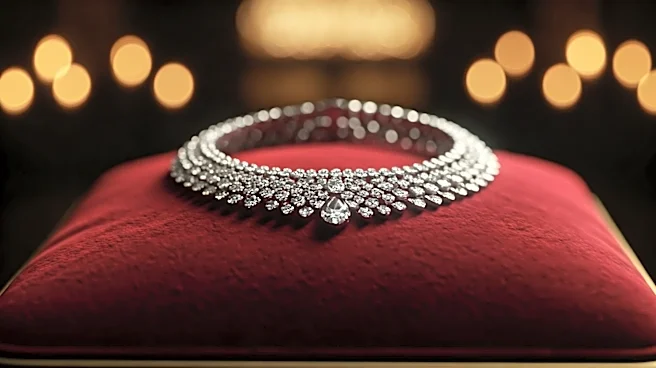
Forget the films for a moment; the most valuable assets at Cannes are often the jewels. We’re not talking about expensive accessories. We’re talking about museum-grade artifacts—unique, irreplaceable collections of diamonds, emeralds, and sapphires loaned by houses like Chopard and Cartier. The combined value of the jewelry worn on the main red carpet on any given night can easily soar into the hundreds of millions of dollars. A single necklace can be worth more than the entire budget of an independent film premiering at the festival. This isn't just fashion; it’s a high-stakes display of portable wealth. The 'museum security protocols' of the headline aren't for a building, but for these tiny, priceless items being worn by human beings in a massive,
chaotic crowd. Each piece is a target, turning the French Riviera into a playground for the world’s most ambitious thieves.
A History of Brazen Heists
This paranoia isn’t theoretical. Cannes has a long and storied history of dramatic jewelry heists that sound like they were scripted by Hollywood. The festival's concentration of wealth and glamour makes it an irresistible target. In 2013, the festival was rocked by two separate, high-profile thefts. First, thieves broke into a hotel room and stole over $1 million worth of Chopard jewelry intended for celebrities. Just days later, a lone gunman walked into an exhibition at the Carlton hotel—a favorite haunt for festival attendees—and walked out with an astonishing $136 million in diamonds. These events are often linked to sophisticated criminal organizations, like the notorious 'Pink Panthers,' a network of jewel thieves from the Balkans known for their meticulous planning and audacious execution. This history is the reason why today’s security measures are so extreme. The threat isn't just possible; it’s proven.
The Jewel Bodyguards and Their Playbook
So, how do you protect a $20 million necklace? With a team of highly trained, plain-clothed (and sometimes not-so-plain-clothed) security specialists who are, in effect, jewel bodyguards. These aren't the same guards protecting the celebrity. Their sole job is to protect the asset. The protocols are intense. The jewelry travels in unassuming vehicles, often with decoy convoys. The cases themselves may be equipped with GPS trackers, and security teams shadow the celebrity from the moment the jewelry box is opened. You’ll often see a discreet figure in a tuxedo standing just a little too close to a star on the red carpet; chances are, their eyes are locked on the diamonds, not the cameras. The rule is constant vigilance. The jewels are often under 'wrist-to-wrist' protection, meaning a guard physically holds the case until it's on the celebrity, and is there to retrieve it the second they step off the carpet.
Fort Knox in a Hotel Suite
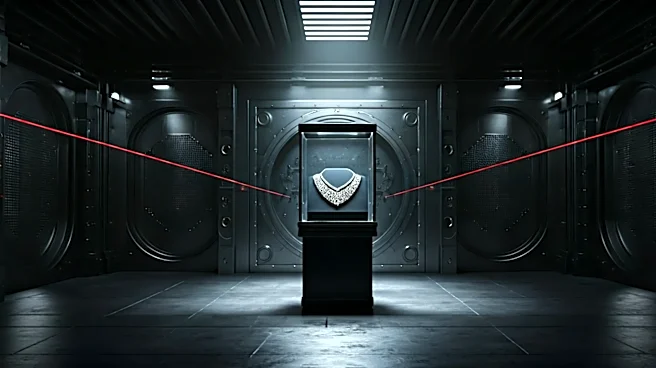
Perhaps the most forgotten aspect is what happens when the party's over. The celebrity doesn't just go back to their hotel room and toss a priceless heirloom on the nightstand. The moment they are out of the public eye, the security team swoops in. The pieces are immediately removed, cataloged, and transported back to a secure location. These aren't the standard hotel safes. Jewelry brands rent entire suites, or even entire floors, and turn them into fortified command centers for the duration of the festival. They install their own vaults, bring in their own 24/7 armed guards, and implement multi-layered verification systems to access the inventory. The logistics are a dizzying dance of scheduling, transportation, and surveillance, ensuring that each piece is accounted for every second of every day. The celebrity is merely a temporary, albeit beautiful, display case.