
A City Built on a Clock Face
Black Rock City, or BRC as it's known, isn't pure chaos. It’s a meticulously planned metropolis that vanishes without a trace. The late architect Rod Garrett, in collaboration with founder Larry Harvey,
designed its famous layout: a massive arc of concentric streets. Think of it as a giant clock face, with the iconic Man sculpture at the absolute center. The concentric roads are given letters (starting with Esplanade closest to the Man), and radial streets are named for their clock position, like 3:00, 6:30, or 9:15. This grid provides a basic, logical framework. It’s the city’s official operating system, giving just enough order to prevent total anarchy and allowing emergency services to find an "address" in the dust. It’s a genius piece of urban planning that makes a place defined by freedom feel navigable.
Navigating by Landmarks and Light
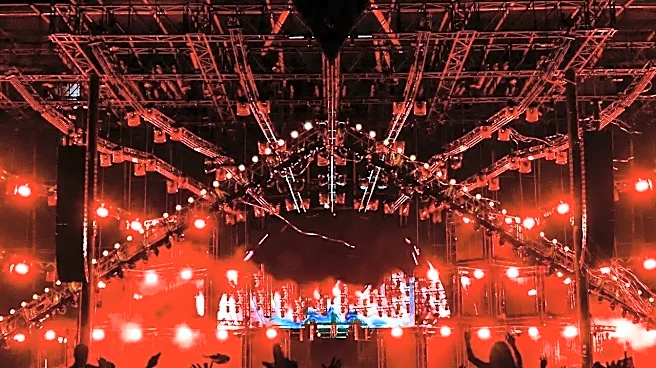
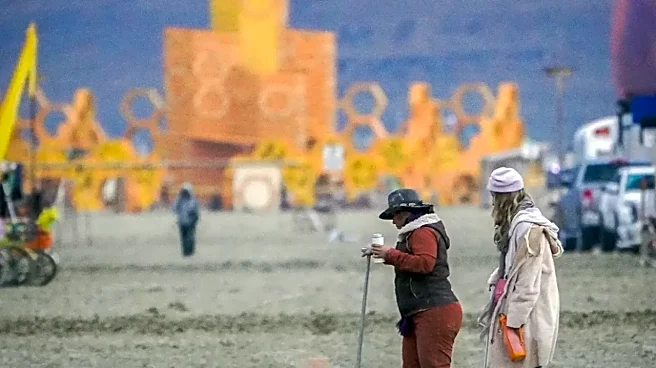
While the grid is the skeleton, the art is the soul of BRC navigation. The two most important landmarks are The Man at the center of the clock and the Temple, which is always located at the 12:00 position. These two towering structures act as lighthouses in a sea of dust, visible from nearly anywhere and providing a constant sense of direction. For the 2026 event, themed "Axis Mundi," this is more intentional than ever. The Man Pavilion, called Cryptomeria, and the Temple of the Moon are designed as central anchors for the entire community experience. But navigation goes beyond the big two. Colossal, brilliantly lit art installations are scattered across the open desert, known as the playa. At night, these glowing sculptures and massive, slow-moving "mutant vehicles" become de facto waypoints. You don't find your camp by looking for a street sign; you learn to turn left at the 70-foot-long metal shark or head toward the fire-breathing octopus. This is wayfinding as a visual, participatory experience.
The Art of Getting Intentionally Lost
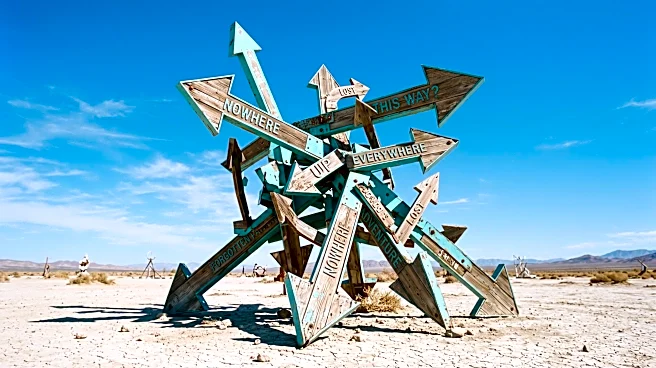
Here’s the secret: the system is designed to fail just a little bit. The sheer scale, the dust storms that reduce visibility to zero, and the overwhelming sensory input mean you will get lost. And that’s the point. Burning Man’s organizers intentionally foster an environment where rigid plans fall apart. The lack of commercial signage and overt direction forces attendees to engage differently with their surroundings. Instead of staring at a map on a phone—which barely works out there anyway—you’re forced to look up. Getting lost leads to serendipitous discovery: stumbling upon a hidden bar giving away free pickles, an impromptu concert on a mutant vehicle, or an art piece that moves you to tears. Finding your way often involves asking a stranger for help, which is a key part of building the event’s famous communal effort. This transforms navigation from a task into an adventure, making the journey itself a form of entertainment.
Wayfinding as Radical Self-Reliance
Ultimately, navigating Black Rock City is a perfect expression of Burning Man’s core principles, especially Radical Self-Reliance. The city gives you the tools—the grid, the landmarks—but it’s up to you to figure out how to use them. No one is holding your hand. This process builds a unique form of spatial awareness and competence. First-timers quickly learn to memorize their camp's coordinates (e.g., "7:30 and D") and identify nearby landmarks. This challenge is a deliberate part of the experience, designed to pull you out of the passive consumption mindset of default life. By forcing you to be present, to observe, and to interact with both the art and the community to find your way, the design reinforces that you are not a spectator. You are a participant, and in this temporary city, figuring out where you are is just as important as deciding where you want to go.