







The Gospel According to Spielberg
If you close your eyes and picture humanity’s first contact with aliens, what do you see? For millions, the images are indelible: the gentle, glowing eyes of a lost creature in a suburban closet; a childlike hand reaching out to touch a human finger;
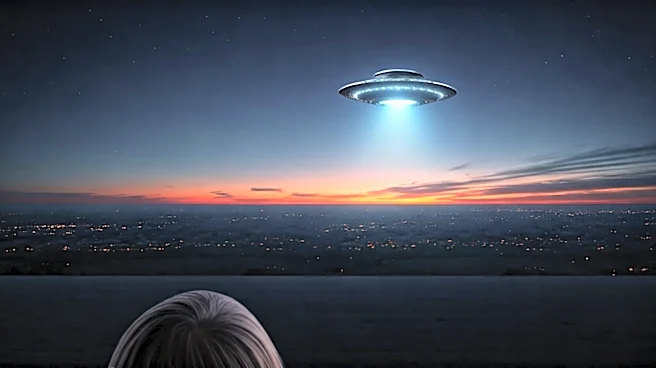
a symphony of lights and music used to communicate with a mothership descending over Devils Tower. This is the 'Spielberg Rule' in action. It’s not a formal doctrine, but a powerful cultural script written by Steven Spielberg with two of the most influential blockbusters of all time: *Close Encounters of the Third Kind* (1977) and *E.T. the Extra-Terrestrial* (1982). Spielberg didn’t just make movies about aliens; he created a modern myth. His extraterrestrials weren’t marauding invaders bent on destruction. They were curious, benevolent, and often misunderstood. They were catalysts for wonder, not fear. In *Close Encounters*, the aliens are mysterious but ultimately peaceful teachers. In *E.T.*, the alien is a vulnerable child-figure who inspires empathy and courage in human children. This narrative—that contact would be awe-inspiring and fundamentally hopeful—became the default setting for the public imagination. It told us that if they came, they would come in peace, and our best, most childlike instincts would be the key to understanding them.
Washington’s Sobering Counter-Narrative
Now, cut from that warm, nostalgic vision to a sterile hearing room in Washington D.C. In the summer of 2023, the tone shifted dramatically. During a House Oversight Committee hearing, former intelligence official David Grusch, speaking under oath, presented a far colder and more unnerving picture. He spoke not of wonder but of a decades-long covert government program to retrieve and reverse-engineer crashed craft of “non-human origin.” He alleged the recovery of “biologics” from these craft. His testimony, alongside that of decorated fighter pilots David Fravor and Ryan Graves, described encounters with Unidentified Anomalous Phenomena (UAPs) that defied known physics and operated with impunity in restricted military airspace. There was no five-note musical theme here. Instead, the language was bureaucratic, technical, and tinged with national security concerns. The conversation wasn't about communication and friendship; it was about technological superiority, potential threats, and government secrecy. This emerging “disclosure” narrative, pieced together from official reports and whistleblower testimony, suggests that if we’re not alone, the first contact wasn’t a gentle meeting in the woods—it was a series of clandestine crash retrievals and silent, unnerving fly-bys witnessed by the military.
When Wonder Meets Bureaucracy
The clash between these two narratives is jarring because it’s a collision of emotion and institution. The Spielberg Rule is a story about the individual’s experience of the sublime. It’s Roy Neary sculpting a mountain from his mashed potatoes, driven by a vision he can’t explain. It’s Elliott forging a psychic bond with a creature he must protect from faceless government agents. The story is personal, emotional, and centered on human connection. The UAP disclosure story, as it stands, is the exact opposite. It’s a story about systems, secrecy, and potential risks. The protagonists are not wide-eyed civilians but career intelligence officers and military pilots. The central conflict isn’t about building trust but about breaking through layers of classification and official denial. The government agents in *E.T.* were the antagonists, the cold-hearted bureaucrats threatening the story’s magical core. In the real-world 2023 version, we are desperately hoping those same types of officials will finally tell us the truth. It completely inverts the narrative we’ve grown so comfortable with.
The End of an Innocent Dream?
This raises a fascinating question: can a congressional hearing kill a cultural myth? For decades, darker alien stories have existed, from the body-snatching paranoia of *Invasion of the Body Snatchers* to the explosive spectacle of *Independence Day*. But the Spielbergian vision of a wondrous, non-threatening encounter has always felt like our cultural home base. It’s the optimistic default we return to. The UAP discussion threatens to permanently shift that default. If the claims are even partially true, the narrative is no longer one of first contact yet to happen, but of a relationship that has been ongoing for decades in the shadows, managed by secretive groups without public knowledge or consent. It replaces the promise of an open, shared revelation with the grim reality of a long-held secret. The awe remains, but it’s now laced with a sense of unease and betrayal. The wonder isn’t gone, but it’s no longer innocent.