






The Lion That Started It All
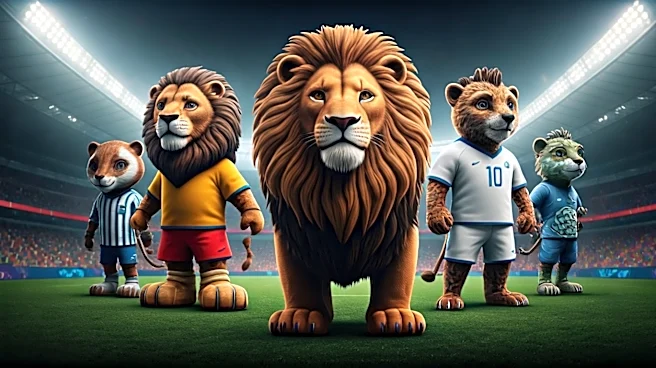
Before 1966, the World Cup was a mascot-free zone. The tournament had posters and logos, but no fuzzy, marketable character to greet fans. That changed when England hosted. Looking for a way to build excitement and create a friendly national symbol, the English Football Association commissioned a mascot. The result was World Cup Willie, a cheerful lion clad in a Union Jack jersey. Designed by commercial artist Reg Hoye, Willie wasn't just a drawing; he was a phenomenon. He appeared on everything from tea towels to stamps, becoming the first piece of World Cup merchandise to truly go mainstream. Willie proved that a mascot could be more than just a logo—it could be a personality, a commercial engine, and an ambassador for the host nation.
An Era of Experimentation
After
Willie’s success, every host nation wanted its own version. The 1970s and early '80s became a period of charming, if slightly repetitive, experimentation. Mexico gave us Juanito in 1970, a boy in a sombrero, followed by West Germany’s Tip and Tap in 1974, two boys symbolizing a divided nation. Argentina’s Gauchito in 1978 continued the trend. These early mascots were simple, human-like figures designed to be welcoming and nationally representative. But by 1982, things got weird—in a good way. Spain introduced Naranjito, a smiling orange, breaking the mold of human characters. Then, in 1986, Mexico delivered an all-time classic: Pique, a jalapeño pepper with a mustache and a sombrero. These abstract and food-based mascots showed that a host’s identity could be expressed with humor and creativity, not just a depiction of its people.
The Modern Mascot: Abstract, Digital, and Commercial
The 1990 tournament in Italy marked another turning point with Ciao, a stick figure made of Italian flag-colored cubes with a soccer ball for a head. It was minimalist, modern, and utterly bizarre, yet it captured the design-forward spirit of Italy. Ciao was a piece of art as much as a mascot, polarizing fans but remaining unforgettable. This paved the way for the digital era. France '98 delivered Footix, a bright blue rooster, who became a massive commercial success and one of the most beloved mascots ever. By the 21st century, mascots were fully integrated digital creations. The Spheriks from 2002 (Korea/Japan) were futuristic CGI beings, while Germany's Goleo VI in 2006 was a lion who, controversially, didn't wear pants. These characters were designed for animation, video games, and a global marketing blitz, a far cry from Willie's simple charm.
More Than Just a Pretty Face
Today, a World Cup mascot has a complex job. It must represent the host nation's culture, appeal to children, look good on merchandise, and increasingly, carry a social or environmental message. Brazil's 2014 mascot, Fuleco the armadillo, was designed to raise awareness for Brazil's endangered wildlife and fragile environment. La'eeb, the floating ghutra from Qatar 2022, was presented as a being from a “mascot-verse,” a meta-concept designed for viral social media moments and endless digital content. These modern mascots are brands unto themselves, with backstories, animated series, and carefully managed online personas. They are the friendly face of a multi-billion dollar operation, tasked with uniting fans and softening the corporate edges of the world's biggest sporting event.