



The Myth of the 'Perfect' Ending
The incinerator scene. Andy’s last playtime. The wave from the driveway. For a generation that grew up with Woody and Buzz, the end of *Toy Story 3* wasn’t just a movie finale; it was a deeply personal emotional milestone. It mirrored our own experiences
of leaving childhood behind, of saying goodbye to one chapter to begin another. It felt so conclusive, so achingly right, that anything after it seemed like a cash grab, a cynical attempt to wring more money from a story that had already found its perfect resting place. But here’s the thing about that “perfect” ending: it was perfect for us, the audience. It wasn't necessarily the end for the toys. Their story is defined by cycles of love, loss, and new beginnings. They existed before Andy and, as the film beautifully established, they would exist after him. The idea that their narrative must be frozen at the moment of a single, poignant handover is a human projection. We want our stories to have clean endings, but the very premise of *Toy Story* is that a toy’s life is a continuous journey of finding purpose with a new kid, a new room, a new adventure. *Toy Story 3* wasn't an ending; it was a transition.
Toy Story 4 Already Broke the Seal
Much of the anxiety around a fifth film ignores the fact that Pixar already crossed the Rubicon with *Toy Story 4*. That movie dared to ask a radical question: What if a toy's purpose isn't just to belong to a child? It gave Woody a completely new arc, separating him from Buzz, Jessie, and the rest of the gang to live a life of freedom with Bo Peep. For many, *this* was the real betrayal of the series’ core ethos. It fractured the found family that was the heart of the first three films. Whether you loved or disliked *Toy Story 4*, it fundamentally changed the rules. The series is no longer about the gang staying together in Bonnie's room. It's now a universe where its main characters are on separate paths. Acknowledging this makes *Toy Story 5* feel less like a desecration of a sacred text and more like the logical next step. The seal has been broken. The story is already in a new, uncertain place. A fifth film isn't reopening a closed book; it's simply turning the page on a chapter that was already started.
Great Stories Are About More Than Goodbyes
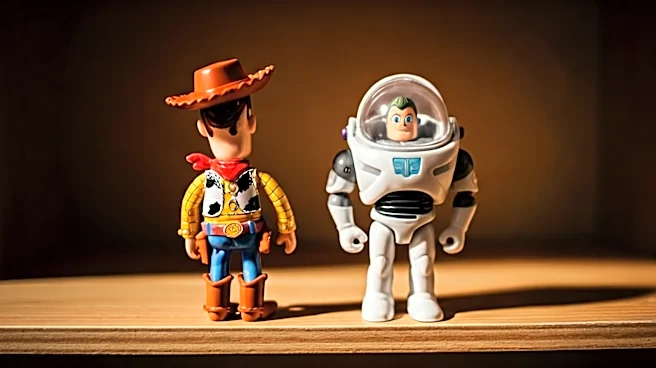
The best franchises don’t just repeat themselves; they use their established worlds and beloved characters to explore new themes. The knee-jerk reaction against *Toy Story 5* assumes the worst: that it will be a lazy, soulless retread. But what if it’s not? What if it explores the complexities of long-distance friendship between Woody and Buzz? What if it delves into what it means for Buzz to step up as the undisputed leader of Bonnie’s toys? What if it tackles the idea of reunion after a long separation? Pixar CCO Pete Docter has hinted the new film will be “surprising” and feature familiar characters in a new way. That’s an exciting creative challenge, not a cynical marketing ploy. The world of *Toy Story* is rich with untapped potential. Its central premise—the secret emotional lives of toys—is an engine for infinite stories. To demand the story stop because one particular goodbye made us cry is to deny the characters the very thing that makes them so compelling: the capacity to live, change, and grow beyond our expectations.
It’s Toy Story, Not Andy's Story
Perhaps the biggest misconception is that the saga was ever truly about Andy. He was the catalyst, the first love, the emotional anchor for the audience. But the title is *Toy Story*. From the very beginning, the drama and comedy came from the toys themselves: their society, their anxieties, their loyalty, and their evolving friendships. Andy was their context, not their entire world. When he left, their story didn't end; the context just changed. Then Bonnie became the new context. *Toy Story 4* drove this home by giving Woody a life completely independent of a child’s bedroom. A fifth movie has the opportunity to double down on this core idea. It can explore what binds these characters together beyond a shared owner. Their bond is the franchise's true north. Wanting to see more of that isn't a sign of being unable to let go. It's a sign of being invested in the characters themselves, not just in the nostalgic packaging of their time with one particular kid.