




Anatomy of the 'Wrong' Tie
So, what is this rule-breaking move? It’s not one single thing, but a collection of deliberate imperfections. The most prominent iteration is the tie tucked into high-waisted trousers, a look that’s part '70s throwback, part nerdy-chic. It’s a move that Miuccia
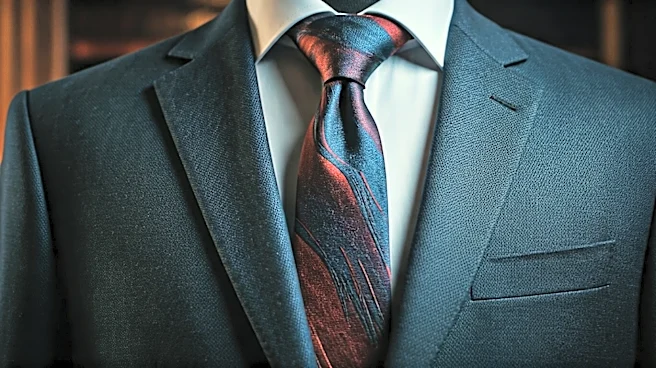
Prada helped popularize, transforming the tie from a dangling emblem of corporate servitude into an integrated part of a silhouette. But it doesn't stop there. We’re also seeing the 'short tie'—knotted so it sits comically high above the beltline, like a sartorial shrug. Or the tie worn extremely loose and long, more like a skinny scarf than a piece of business attire. Sometimes, it’s simply worn askew, the back blade peeking out intentionally. The common thread is a conscious decision to wear the tie 'incorrectly,' making it clear that you know the rules but have chosen to ignore them.
Paris as the Perfect Playground
It’s no accident this trend is bubbling up in Paris. More than any other city, Paris embodies the tension between tradition and revolution in fashion. It's the home of legacy haute couture houses that dictate propriety, but it’s also the stage for the most avant-garde designers and the most photographed street style in the world. This makes it the perfect laboratory for experimenting with established codes. While New York might focus on commercial appeal and London on raw punk energy, Paris has a unique appreciation for deconstruction—taking a classic, well-understood garment and dissecting its meaning. The tie is a prime candidate. It’s arguably the most loaded symbol in the male wardrobe, representing authority, conformity, and professionalism. By messing with it on the streets of Paris, stylists, editors, and influencers are broadcasting a new message on a global frequency.
Dismantling the Corporate Uniform
At its core, this trend is a commentary on the shifting landscape of work and masculinity. For decades, the tie was the non-negotiable centerpiece of the corporate uniform, a signifier that you belonged in the professional world. In a post-pandemic era defined by hybrid work, casualization, and a widespread questioning of traditional office culture, the tie has become almost an optional antique. So, when it does appear, it can’t just be worn the old way. Tucking it in or tying it 'wrong' is a way to acknowledge its history while robbing it of its old-world power. It says, 'I’m dressing up, but on my own terms.' It’s a sartorial wink that communicates a fluency in fashion while rejecting its stuffiest conventions. It’s less about looking 'sharp' in the traditional sense and more about looking interesting and self-aware.
A Past and Future Remix
Like most things in fashion, this isn't entirely new, but the context is. The tucked-in tie has roots in '70s styling and flickered in early 2000s indie scenes. Style icons from previous generations, from mods to punks, have also played with the tie as an accessory of rebellion rather than conformity. But today’s resurgence feels different. It’s not just about one subculture; it’s a more widespread aesthetic shift seen on runways from Prada to Kenzo and echoed by street-style stars. It’s part of a broader movement in menswear that embraces a softer, more ambiguous, and often more playful form of dressing. By borrowing from the past—a bit of '70s nonchalance, a dash of '90s minimalism—designers are crafting a distinctly modern uniform for men who are navigating a world where the old rules of dressing simply no longer apply.