
The Unique Stadium Challenge
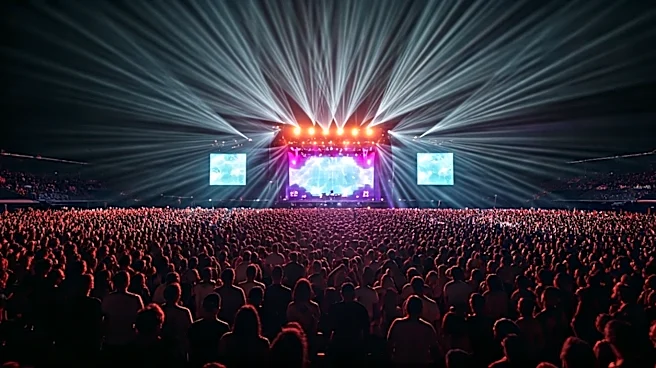
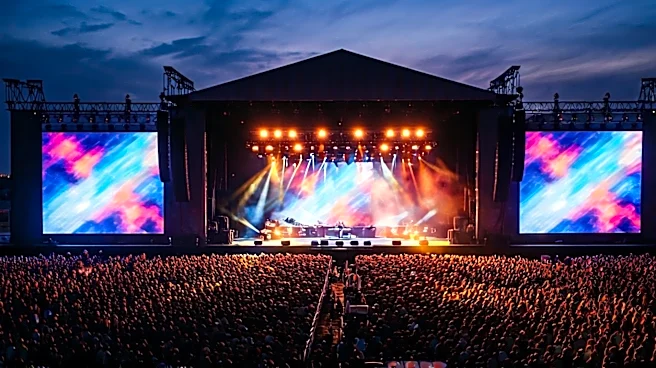
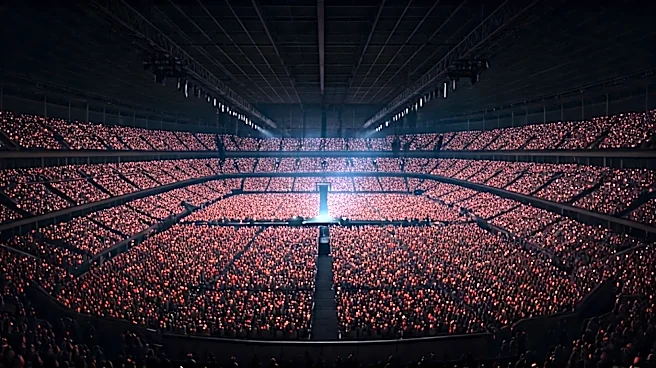
A stadium isn't just a big club. It’s an entirely different beast with its own rules of physics and psychology. The sound echoes, the artist on stage can look like an ant, and the audience is a sprawling,
distracted sea of humanity. People are getting beers, checking their phones, and chatting with friends. They aren’t leaning in to catch every nuanced word of a sensitive ballad. At CMA Fest, this is amplified. Fans have been on their feet all day, seeing dozens of acts. Their attention is a precious, finite resource. For a song to succeed here, it can’t require quiet contemplation. It can’t be a complex, seven-minute story-song with intricate character development. Those are the tracks you fall in love with through your headphones. In a stadium, a song has to be an event. It needs to be an instant invitation to a party that everyone, from the front row to the nosebleeds, feels they were invited to. It requires a specific lyrical tool to make that happen.
The Power of the 'Collective We'
The single most effective lyric type for this environment is the 'Collective We' anthem. It’s not about a specific topic—it can be about drinking, hometowns, love, or heartbreak. The magic is in its point of view. These lyrics are written in a way that makes every single person feel like the song is about their own life, while simultaneously being about the shared experience of everyone around them. These songs often use pronouns like “we” and “us,” or they use a universal “you” that feels personal. The themes are broad, tapping into foundational American experiences: the pride of a small town, the freedom of a Friday night, the universal sting of a breakup, the simple joy of a cold beer. The lyrics act as a social glue. They aren't telling a specific person’s story; they are offering a script for a collective identity, allowing 50,000 strangers to become a single, roaring choir for three glorious minutes.
Case Study: Modern Stadium Kings
Look at the artists who command a stadium with ease. Luke Combs is a master of this. When he launches into “Beer Never Broke My Heart,” the core message—“Long-neck, ice-cold beer never broke my heart”—is a simple, declarative statement of playful defiance. It’s not a story; it’s a creed. Every person who’s ever been let down can raise their drink and shout along. It’s a collective exorcism of bad days and bad dates. Similarly, Eric Church’s “Springsteen” works on a collective trigger. The lyrics aren’t just about his specific memory; they are about *the feeling* of having a song that defined a moment in your youth. He taps into a shared nostalgia, letting each person fill in the blanks with their own 'seventeen' and their own 'sound of a summer.' Morgan Wallen’s “Last Night” became a stadium monster because its back-and-forth narrative is a universally understood, if dysfunctional, romantic dynamic. The hook is simple, memorable, and built for a mass singalong.
Why Lyrical Nuance Gets Lost
This isn't to say that lyrically complex songs are bad. They’re often an artist’s best work. But in a stadium, they can fall flat. A song like Jason Isbell’s “Elephant,” a devastatingly specific and poetic masterpiece about watching a friend die of cancer, requires an intimacy that a stadium cannot provide. The hushed reverence it commands in a theater would be swallowed by the sheer scale and ambient noise of an open-air festival. The 'Collective We' anthem is a purpose-built tool. It’s vocally simple enough for a slightly off-key crowd to sing, emotionally direct enough to be understood in seconds, and thematically broad enough to include everyone. The genius of these songs is that they feel deeply personal and massively communal at the same time. They transform a disparate collection of individuals into a temporary tribe, united by a simple, powerful idea shouted at the top of their lungs.