




First, Acknowledge the Timeline Is Wild
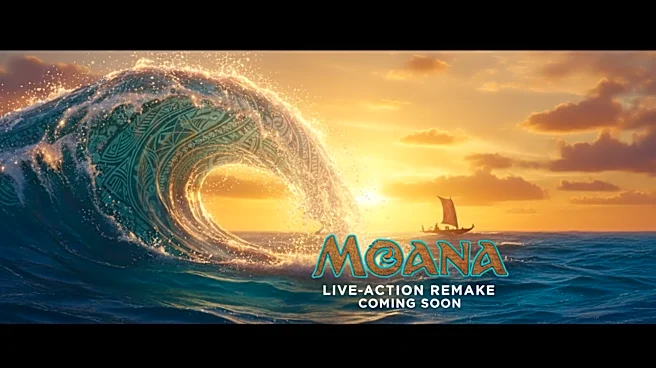
Let’s start by validating the gut reaction: yes, it’s fast. The original Moana sailed into theaters in 2016. The live-action version is set for release on July 10, 2026, just a decade later. In a world where Hollywood remakes often target films from 20,
30, or even 50 years prior, a ten-year gap feels like a blink. Acknowledging this is the best starting point for any conversation. It shows you get the cynicism. The movie became one of the most-streamed titles in history, meaning it never really left the cultural consciousness, which makes a remake feel both inevitable and unusually quick.
This Isn't Just a Remake; It's a Passion Project
The key difference-maker here is Dwayne “The Rock” Johnson. He isn't just reprising his role as the demigod Maui; he’s a primary producer and the project's most vocal champion. For Johnson, this isn't just another blockbuster. He has repeatedly stated that the story is deeply personal, calling it an emblem of his own Polynesian culture and a tribute to his late grandfather, High Chief Peter Maivia. Johnson’s heavy involvement from the ground up reframes the narrative from a faceless corporate decision to an artist’s desire to shepherd his cultural legacy. He pushed for the film, wanting to anchor the franchise in live action while he could still physically embody the larger-than-life demigod.
It's About Passing the Baton
One of the most powerful arguments against the “too soon” critique involves Auliʻi Cravalho, the original voice of Moana. When the remake was announced, many assumed she would star. Instead, she took a powerful step back. Cravalho, now in her mid-20s, chose not to reprise the role, instead taking an executive producer credit. She explained that it was vital to “pass the baton to the next young woman of Pacific Island descent.” Her decision ensures another performer gets the same life-changing opportunity she did at 14. That role has gone to Catherine Laga'aia, a 19-year-old Australian actress of Samoan heritage, a newcomer who now gets to carry the torch, a move Cravalho has enthusiastically endorsed. This act of mentorship adds a layer of integrity to the production that most remakes lack.
A Chance to Deepen the Story
While the animated film was lauded for its cultural representation, the live-action format offers a new opportunity. The production has brought on talent like director Thomas Kail (Hamilton) and a cast largely of Pacific Islander descent, including John Tui as Chief Tui, Frankie Adams as Sina, and Rena Owen as Gramma Tala. Johnson and the other producers have emphasized their commitment to honoring the traditions, music, and dance at the core of the story. This isn't about fixing something that was broken, but rather adding new layers of authenticity and texture that can only be achieved by bringing the world to life with real people and places, filmed partly on location in Hawaii.
And Yes, It's Part of a Bigger Disney Universe
Let's be clear-eyed: business is always a factor. Moana is a monster franchise for Disney. But the strategy is more complex than a simple remake. An animated sequel, Moana 2, was released in late 2024 to huge box office success. Johnson has even confirmed that an animated Moana 3 is in development. The live-action film isn't replacing the animated story; it's building a parallel track. By creating both animated sequels and live-action adaptations, Disney is solidifying Moana as a multi-generational, multi-format mega-franchise, much like it has with The Lion King. The live-action film, with its 2026 release, strategically keeps the franchise in the spotlight between animated installments.