






Wealth Whispers, It Doesn’t Shout
Perhaps no show has drilled this concept into the cultural consciousness more than ‘Succession’. The Roy family is a masterclass in what’s been dubbed ‘quiet luxury’. Costume designer Michelle Matland intentionally dressed the billionaire clan in logo-less,
impeccably tailored, neutral-toned pieces from brands like Loro Piana and Brunello Cucinelli. To the average viewer, Logan Roy’s sweater is just a sweater; to those in the know, it’s a four-figure cashmere garment. The message is clear: when you have true, generational wealth, you have nothing to prove. The clothing is an anti-statement, a deliberate rejection of flashy logos that screams wealth more loudly than any monogram could. It’s a code, understood only by their peers, that firmly separates the 'old money' Roys from the 'new money' characters who try too hard.
The Tell-Tale Fit
The difference between looking capable and looking like an imposter can come down to a single centimeter at the sleeve. In ‘Saltburn,’ the calculated awkwardness of Oliver Quick’s wardrobe is a key narrative device. When he first arrives at Oxford, his clothes are new, stiff, and just a little 'off'. Costume designer Sophie Canale highlights a pivotal moment when the aristocratic Farleigh immediately clocks that Oliver's suit for a formal ball is a rental because the sleeves are too long. It’s a small detail that speaks volumes. For the truly wealthy like his friend Felix, clothes are often rumpled and worn-in, as if thrown on without a thought—a privilege afforded to those who don’t need to use their clothes as a resume. Felix’s effortlessness, inspired by real-life young royals, contrasts sharply with Oliver’s buttoned-up, calculated presentation, a clear signal of his outsider status.
Fabric Is a Four-Letter Word
The very fiber of a garment can betray a character’s circumstances. In Bong Joon-ho’s masterpiece, ‘Parasite,’ class is a multisensory experience, but the visuals are just as potent. The Kim family’s lived-in, slightly worn, and generic clothing stands in stark contrast to the crisp, architectural garments of the wealthy Park family. The Parks’ clothes are not just expensive; they are structurally different, made from materials that hold their shape and resist the messiness of daily life. The Kims, living in a semi-basement, are visually and metaphorically ground-down. Their clothing, like their home, carries the scent and texture of poverty—a stark signifier that they can never wash away, no matter how well they play their roles upstairs.
The Power of the Period Piece
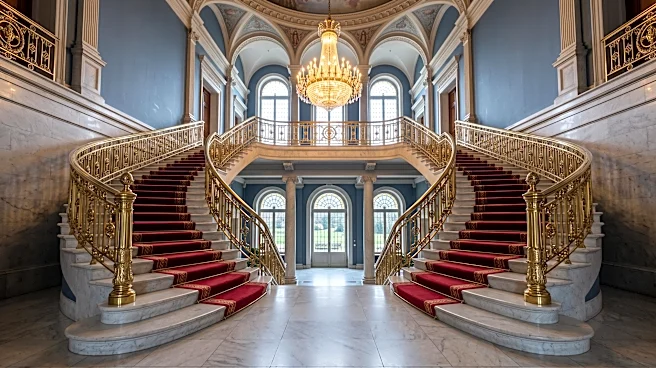
Historical dramas offer a magnified lens on this phenomenon. In a show like HBO’s ‘The Gilded Age,’ costume is not just decoration; it is a weapon. Costume designer Kasia Walicka-Maimone uses clothing to chart the battle between old-money New York and the new-money industrialists. The ‘new’ money, like Bertha Russell, is draped in opulent, elaborate, and trend-pushing gowns that are a deliberate display of their vast fortune. In contrast, the established guard, like Agnes van Rhijn, wears clothes that are elegant but more restrained, rooted in tradition and an assured sense of their own authority. The cut of a bodice or the lavishness of a bustle becomes a visual shorthand for a character’s entire social strategy and ambition.