






A Weapon That Sparks a War
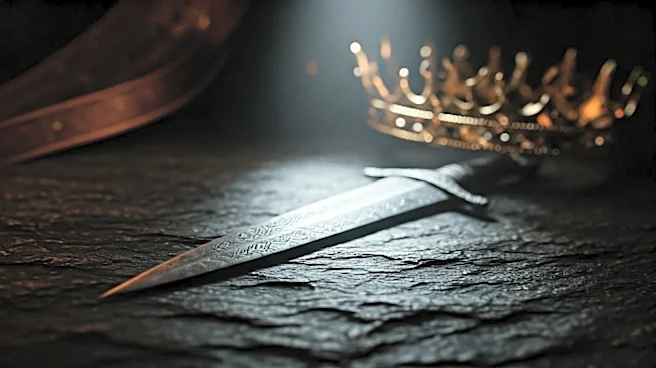
When we first see the Catspaw Dagger in *Game of Thrones*, it’s a simple instrument of violence. It’s the weapon a low-rent assassin uses in a failed attempt on Bran Stark’s life. But in Westeros, nothing is simple. The dagger’s fine make—a Valyrian steel
blade and a dragonbone hilt—signals that it belongs to someone of wealth and status. This single object becomes a catalyst for catastrophe. Petyr “Littlefinger” Baelish masterfully uses the dagger to frame Tyrion Lannister for the attack, a lie that poisons Catelyn Stark’s mind, leads to her capture of Tyrion, and directly escalates the tensions between the Starks and Lannisters into open warfare. Before a single sword is drawn in the War of the Five Kings, this dagger has already done its work, proving that the deadliest conflicts are often started not by armies, but by a well-placed lie attached to a powerful object.
The Symbol of Deception
For years, the dagger disappears into the possession of Littlefinger, the man who understands its symbolic power better than anyone. For him, the dagger isn’t just a weapon; it’s a prop in his long, elaborate play for power. It represents the original sin of the entire conflict. When he finally presents it to Bran Stark in Season 7, he does so with a smug monologue about the chaos it caused, believing he is still the puppet master. But the power has shifted. Bran, now the Three-Eyed Raven, unnerves Littlefinger by quoting his own line back to him: “Chaos is a ladder.” In that moment, the dagger is passed from the man who used it to manipulate the past to the boy who can see all of it. Bran, having no use for a physical weapon, then gives it to Arya. The dagger's journey transfers it from a tool of political deceit to an instrument of fated justice.
The Blade That Saves the World
A crown earns you a kingdom of men. The Catspaw Dagger, in the hands of Arya Stark, saved all of them. Its most significant role in *Game of Thrones* wasn’t sparking a human war but ending a supernatural one. During the Battle of Winterfell, just as the Night King stands poised to extinguish the memory of the world, Arya launches herself through the darkness. The Night King catches her, but she drops the Valyrian steel blade from one hand to the other—a move she practiced in a sparring session with Brienne—and plunges it into the ancient evil. The dagger, which started as a symbol of human betrayal, becomes the very tool of humanity's salvation. It fulfilled a destiny far greater than any king’s decree or political maneuvering. This single act elevates the dagger from a historical curiosity to a legendary artifact, the key that turned the lock on the Long Night.
The Prophecy Made Manifest
For years, the dagger’s importance seemed rooted only in *Game of Thrones*. Then, *House of the Dragon* gave it an origin story that re-contextualized everything. We see the dagger on the hip of King Viserys I Targaryen, an heirloom passed down through his family line. More importantly, he reveals to his daughter Rhaenyra that it carries a hidden secret. When heated by fire, the blade reveals an inscription of Aegon the Conqueror’s prophecy: “From my blood come the prince that was promised, and his will be the song of ice and fire.” The dagger wasn't just a fancy knife; it was a secret scroll, a physical vessel for the Targaryen dynasty's most sacred mission. This reveal is stunning. It means the dagger that Littlefinger used for petty lies, the one that Arya used to kill the Night King, was carrying the very prophecy about that fated battle all along. It connects Aegon’s conquest to the Long Night, bridging a century of Targaryen turmoil with the ultimate threat to the realm.