





The Freedom of an Animated Demigod
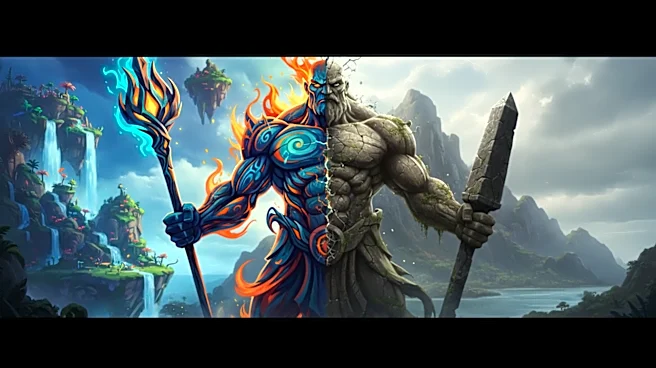
A huge part of what makes the animated Maui so hilarious is something live-action can never fully replicate: the absolute defiance of physics. Animation allows for a character's body to be an instrument of pure expression. When Maui is being boastful,
his chest puffs out to an impossible size. When he’s exasperated with Moana, his face contorts in ways that no human actor could manage without the help of heavy, and often distracting, digital effects. This physical comedy is built on perfect timing—pauses, smirks, and eye-rolls that are timed to the millisecond to land the joke. It's a visual language where exaggeration is the native tongue. A real person, even one as charismatic and physically imposing as Dwayne Johnson, is bound by the laws of gravity and biology. Animation gave Maui a larger-than-life presence that went beyond his size; it gave him a larger-than-life expressiveness that defined his comedic charm.
The Mini Maui Conundrum
Then there’s the tattoo. "Mini Maui,” the two-dimensional Jiminy Cricket living on Maui's skin, is one of the most inventive comedic devices in modern Disney history. He is Maui’s cheerleader, conscience, and sharpest critic, all rolled into one. This character is a masterpiece of mixed media, with legendary 2D animator Eric Goldberg creating a hand-drawn character who interacts seamlessly with a 3D-animated world. Mini Maui can yank on other tattoos, argue with his host, and pantomime jokes that land with perfect precision. How do you translate that to live-action? The character is, by definition, a cartoon. While early reviews suggest Mini Maui is still a scene-stealer, the translation is a delicate one. Recreating him with CGI risks losing the unique charm that came from blending two distinct forms of animation. It was the contrast—the 2D soul on the 3D body—that made the joke work so perfectly.
The Rock Factor
Of course, the live-action adaptation has an ace up its sleeve: Dwayne Johnson himself. He isn't just playing Maui; he is Maui. Johnson voiced the character in the animated film and has said the demigod was inspired by his own grandfather. This gives him a unique ownership of the role. Johnson is the first actor from a Disney animated film to physically portray the same character in a live-action remake. His unparalleled charisma and natural comedic timing are undeniable assets. The challenge, however, is that Johnson's star persona is already so well-established. Instead of seeing Maui, audiences may just see "The Rock playing Maui." While his performance in the animated film was universally praised, bringing that to a physical performance is different. The comedy can’t rely on the same squash-and-stretch gags; it has to be grounded in his performance, which will inevitably be different from the boundless energy of his animated counterpart.
Finding a New Rhythm
Adapting animated characters is notoriously difficult. What feels expressive and vibrant in a cartoon can look uncanny or lifeless in photorealistic CGI. The line between endearing and creepy is dangerously thin. The new film, directed by Thomas Kail, has the monumental task of not just recreating iconic moments but finding a new comedic rhythm that works in a live-action space. Some of the original's best jokes were purely visual and dependent on the animated medium. The live-action film must invent new ones or find clever ways to reinterpret the classics. Early reports suggest the film is a very faithful, beat-for-beat retelling, which can be a double-edged sword. It pleases fans who want to see familiar scenes but risks feeling like a less vibrant copy. The success of Maui's comedy won't come from a perfect imitation, but from how well the filmmakers and Johnson find a new, equally funny truth for the character in his new reality.