








The Face as a Landscape
IMAX has long been the format for spectacle. We associate it with dizzying space voyages, sprawling battlefields, and city-leveling explosions. Its massive 70mm film frame captures breathtaking vistas with unparalleled clarity. But a new school of thought,
most visibly championed by director Christopher Nolan, is redeploying this technology for a different kind of spectacle: the human face. In "Oppenheimer," cinematographer Hoyte van Hoytema spoke of wanting to discover IMAX as an intimate medium, treating the face like a landscape full of complexity and depth. This shift from external grandeur to internal geography is key. By pushing the enormous cameras impossibly close to actors, filmmakers can turn a subtle expression—a flicker of doubt, a wave of regret—into an event as monumental as any CGI monster. They essentially make a character's psychological state the main attraction.
Damon: The Grounded Hero
Enter Matt Damon, an actor whose entire brand is built on a foundation of relatable humanity. He isn’t a chiseled god; he’s the everyman, even when he’s a superspy or a stranded astronaut. His performances are often defined by a quiet internal struggle, a visible sense of a man thinking, processing, and enduring. Placing that specific quality under the microscope of an IMAX lens creates a fascinating tension. The format's hyper-clarity would magnify every micro-expression, every weary line on his face. We wouldn't just see Odysseus, the hero of legend; we would see the exhausted, homesick man, the husband and father ten years lost at sea. Damon’s grounded charisma, which makes extraordinary roles feel relatable, would be the anchor for the entire epic, transforming it from a myth into a deeply personal drama.
Reinventing the Epic Journey
Homer's "The Odyssey" is more than a monster-of-the-week adventure; it’s one of Western literature's foundational psychological journeys. At its core, it is a story about nostos—homecoming—and the struggle to retain one's identity against overwhelming odds. Odysseus's defining trait isn't his strength but his cunning, his intellect, and his sheer perseverance. An IMAX adaptation focused on close-ups would honor this by making his internal journey the true spectacle. Instead of just watching him escape the Cyclops, we would be trapped in his mind as he formulates the plan. We wouldn't just see him resist the Sirens' call; we'd experience the torment of that temptation through his eyes, bound to the mast. The monsters and gods become external manifestations of an internal battle, and the close-ups would be our window into that fight.
Putting the Audience in the Raft
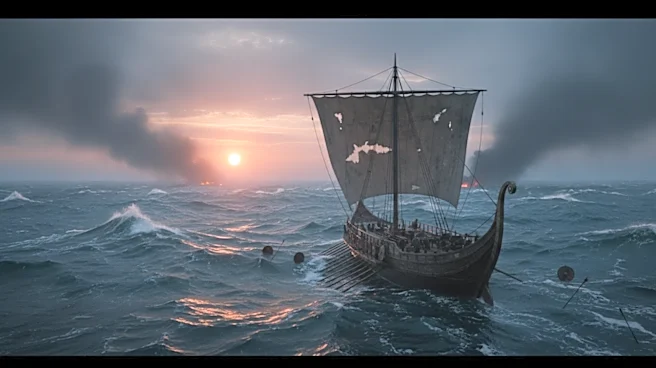
Ultimately, the power of an IMAX close-up is its effect on the viewer. It collapses the distance between the audience and the character. Seeing a human face blown up to the size of a building is an inherently intimate, almost unnervingly personal experience. We are no longer passive observers watching a story unfold; we are placed directly into the character's personal space, forced to confront their emotional reality. In the case of Odysseus, we would feel his isolation on Calypso’s island, his desperation on the stormy seas, and his profound weariness after two decades of war and wandering. The epic scale of the format would be used not to distance us, but to immerse us completely. The vastness of the ocean would be matched by the vastness of his suffering and resilience, turning a 3,000-year-old story into something immediate and deeply felt.