



The Twenty-Year Nostalgia Cycle
Fashion, like music and film, runs on a surprisingly predictable clock. Cultural historians often point to a '20-year cycle,' where the trends of a given era are rediscovered and reinterpreted by a new generation two decades later. The original punk explosion
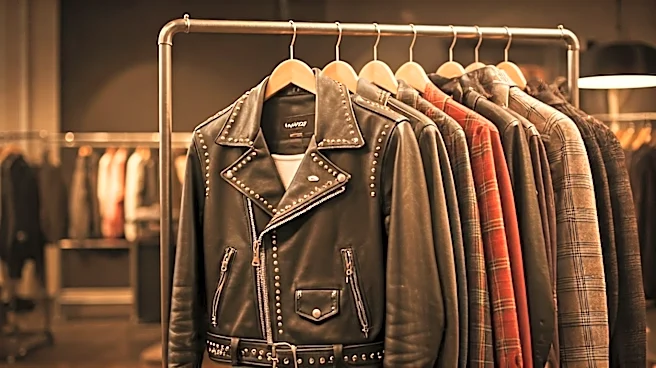
in London and New York happened roughly between 1975 and 1979. Fast forward twenty years to the mid-1990s, and you have a generation of teens and twenty-somethings who were infants or not yet born during punk’s first wave. To them, the ripped shirts, safety pins, and leather jackets weren't just old clothes; they were artifacts from a legendary, almost mythical period of rebellion. This created the first critical ingredient: a new, eager audience ready to adopt the aesthetic, not as a political statement, but as a style.
The Rise of 'Alternative' Culture
The 1990s didn’t just rediscover punk in a vacuum; the decade’s entire cultural landscape primed the pump. The explosion of grunge, led by bands like Nirvana, brought a disheveled, anti-corporate aesthetic into the mainstream. Kurt Cobain’s thrift-store cardigans and torn jeans made 'secondhand' cool. While musically distinct, grunge shared punk's DNA of angst and alienation. This created a commercial category called 'alternative' that lumped together grunge, indie rock, and revived punk sounds from bands like Green Day and The Offspring. Suddenly, the core tenets of punk style—DIY modifications, worn-out materials, anti-fashion statements—were not only understandable to a mass audience but commercially viable. A teenager in 1994 who loved 'alternative' music saw a vintage Ramones shirt not just as a band tee, but as a badge of honor in a broader cultural movement.
The High-Fashion Co-Sign
For an aesthetic to become truly valuable, it needs a stamp of approval from the elite. Throughout the 90s and 2000s, high fashion began its long and complicated love affair with punk. Designers like Jean Paul Gaultier and, most iconically, Alexander McQueen started incorporating punk motifs—tartan, safety pins, deconstruction—into their runway shows. They elevated the 'street' style into 'couture.' This process culminated in the Metropolitan Museum of Art's 2013 exhibition, 'PUNK: Chaos to Couture,' which officially canonized the movement's fashion as art. Once designers and museums declared that a Seditionaries original (the label by Vivienne Westwood and Malcolm McLaren) was a piece of design history, its value as a collectible skyrocketed. Vintage dealers could now frame these items not as old clothes, but as investment pieces, justifying premium prices to collectors and fashion connoisseurs.
The Internet Creates the Marketplace
The final, and perhaps most crucial, piece of the puzzle was technology. Before the late 1990s, finding a specific, authentic piece of 70s punk fashion was a matter of sheer luck—stumbling upon it in a dusty thrift store or knowing a guy who knew a guy. The rise of the internet, and specifically eBay, changed everything. For the first time, a seller in Ohio could connect with a buyer in Tokyo who was desperate for an original Circle Jerks t-shirt. This digital marketplace made the rare common and the invisible visible. It allowed a global community of collectors to form, compare notes, and establish market prices. Suddenly, there was a liquid, transparent market for these goods. This new infrastructure allowed specialized vintage shops to flourish, both online and in brick-and-mortar locations in trendy neighborhoods, confident that a global customer base existed for their niche inventory.