






Fighting a Problem, Not an Enemy
Most sci-fi stories give us a clear antagonist: a tyrannical empire, a monstrous alien queen, or a rogue AI. The conflict is external and usually resolved with superior firepower. Andy Weir's novel flips the script. The villain in 'Project Hail Mary'
isn't a person or a species; it's a scientific problem. A microbe called Astrophage is literally eating the sun, threatening both Earth and the home world of an alien named Rocky. There is no one to shoot, no evil mastermind to outwit. The only enemy is a set of physical laws and a ticking clock. This brilliant framing forces the narrative away from combat and toward something far more interesting: a collaborative puzzle. The central question isn't 'How do we blow them up?' but 'How do we figure this out together?' It shifts the entire dynamic of the story from a zero-sum game of destruction to a desperate, shared quest for knowledge.
A Friendship Forged in Physics
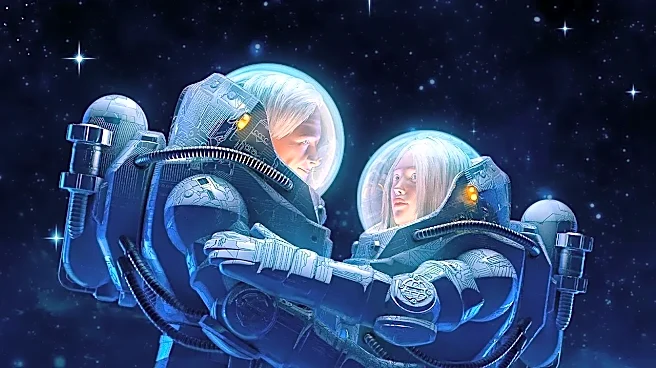
At the heart of the novel is the relationship between amnesiac astronaut Ryland Grace and Rocky, a spider-like engineer from another star system. Their first contact isn't a tense standoff but a cautious exchange of scientific principles. They use math as their universal translator. This foundation sets the tone for everything that follows. Their bond isn't built on saving each other in battle but on intellectual respect and shared curiosity. They become friends while troubleshooting xenonite engineering and debating the properties of Taumoeba. The story finds its emotional core in small acts of trust, like Rocky insisting on watching over Grace while he sleeps, a custom of deep friendship for his species. Their partnership proves that the process of discovery—of learning another's language, sharing jokes, and marveling at each other's biological differences—can be more compelling than any fight scene.
When Every Calculation Is a Gamble
In 'Project Hail Mary,' the tension comes not from dodging laser blasts, but from the terror of a failed experiment. When your mission is to save two species from extinction, every calculation carries the weight of a world. Weir masterfully makes the scientific process feel like a high-stakes action sequence. A contaminated sample, a miscalculation in fuel efficiency, or a simple engineering oversight could lead to irreversible catastrophe. The reader hangs on every breakthrough and recoils at every setback. Grace and Rocky's brainstorming sessions are as gripping as any chase scene, because the stakes are intellectual. Will their hypothesis about Astrophage reproduction hold up? Can they modify the Taumoeba organism to survive in a new environment? Each success is a hard-won victory, making the intellectual struggle feel visceral and deeply rewarding.
A World (Mostly) Without Politics
While Grace and Rocky work together in deep space, a parallel story unfolds on Earth. To launch the Hail Mary mission, humanity is forced into an unprecedented level of global cooperation. The project is spearheaded by Eva Stratt, a ruthless but pragmatic leader who cuts through international red tape to get the job done. Unlike stories where human factions bicker and betray each other in the face of annihilation, 'Project Hail Mary' presents a world where the best of humanity unites against a common threat. The crew of the Hail Mary itself was originally composed of American, Russian, and Chinese astronauts, symbolizing a shared global effort. This focus on unity, both on Earth and in space, reinforces the book's central theme: we are smarter, better, and more effective when we work together. The drama comes from solving the problem, not from manufactured infighting.