







The Crossbody's Humble Origins
First, let's remember the crossbody bag’s original promise: function. It was born from utilitarian items like mail carriers’ satchels and military map cases. Its entire purpose was to be hands-free, practical, and secure. You could bike, shop, or navigate
a crowded subway with your essentials safely strapped to your body. For decades, the standard crossbody adhered to a simple formula: a reasonably sized pouch that could hold a wallet, keys, phone, and lipstick, suspended from a modest strap that hit comfortably at the hip. It was dependable, logical, and, for the most part, aesthetically predictable. This practicality is the baseline that luxury designers are now so gleefully subverting.
Breaking the Proportional Code
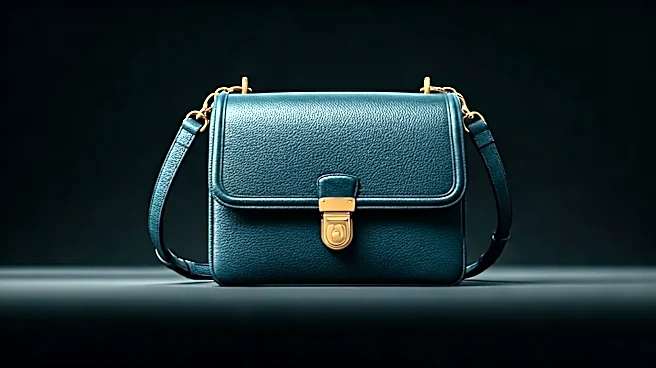
The “different” feeling you’re noticing is the result of designers deliberately messing with that baseline. Luxury brands like Bottega Veneta, Jacquemus, and even legacy houses like Chanel and Hermès are playing a game of exaggeration. They aren’t just making a bag; they are making a statement by manipulating our built-in sense of scale. This happens in a few key ways. First, the body of the bag is either shrunken to comical, doll-like micro dimensions (think Jacquemus’s Le Chiquito, which famously holds little more than a single AirPod) or blown up into an oversized, slouchy form that engulfs the hip. Second, the strap—once a purely functional element—becomes a design piece itself. It might be a chunky, statement chain that adds significant visual and physical weight, or it could be unnaturally thin and long, causing the bag to hang low against the thigh in a way that feels less secure and more consciously styled.
A New Kind of Status Symbol
When a luxury house recuts the proportions, it’s not just an aesthetic choice; it’s a redefinition of status. The classic, logo-heavy 'It' bag of the 2000s shouted wealth. Today’s disproportionate bags whisper it in a more complex code. A micro-bag that can’t hold a phone sends a powerful signal: the wearer has a life where logistical concerns are handled by others. They don't *need* to carry a portable charger, a fat wallet, or a bundle of keys. Their world is one of car services, digital payments, and assistants. It’s the luxury of not needing to be prepared. Conversely, an artfully oversized or strangely shaped bag signals that the wearer is deep inside the fashion conversation. They understand the trend, they appreciate the designer’s vision, and they are willing to prioritize form over the mundane function that the original crossbody represented.
The Luxury of Impracticality
This leads to the ultimate shift: these new crossbody bags feel different because they are often intentionally impractical. A heavy chain strap can dig into your shoulder. A bag with no top closure risks spilling its contents. A pouch too small for your phone is, by any rational measure, a failure as an accessory. But in the world of high fashion, this impracticality is precisely the point. It separates the bag from its workhorse origins and elevates it into the realm of pure, wearable art. It forces you to be more conscious of how you carry it and what you carry in it. This intentional friction—this departure from easy, thoughtless utility—is what creates the distinct, memorable, and undeniably luxurious feeling. You're not just carrying a bag; you're engaging with a piece of design.