





The Familiar Structure in the Flow
American sports are built on a rhythm of stop and start. Football has downs, basketball has timeouts and foul shots, and baseball is a series of discrete events. Soccer, by contrast, flows. A dead-ball situation—when the ball is out of play for a free
kick, corner kick, or throw-in—is a temporary halt to that flow. For a new viewer, this is a moment to breathe and reset. It’s a recognizable pause that provides a structure similar to other sports, allowing you to anticipate what comes next. Instead of trying to decipher a constantly shifting picture, you get a static snapshot: the ball, the players, and a clear objective. It’s the game holding still just long enough for you to catch up.
The Free Kick: A Moment of Potential Genius
When a foul is committed, the game stops, and the non-offending team is awarded a free kick. If this happens close to the opponent's goal, it becomes one of soccer’s most exciting moments. Think of it as a team’s ace pitcher getting a chance with the bases loaded, or a quarterback needing to complete a single, crucial pass. Players will form a defensive "wall" to block the shot, while the attacking team’s specialist steps up to the ball. The goal is to either shoot directly or deliver a perfect pass to a teammate. It’s a high-tension scenario that showcases individual skill, with the potential for a spectacular, curving shot that finds the back of the net.
The Corner Kick: A Tactical Chess Match
When the defending team kicks the ball over their own goal line, the attacking team gets a corner kick. This is soccer's equivalent of an offense setting up on the one-yard line. The ball is placed in the corner of the field, and a player kicks it into the crowded penalty area, where teammates and defenders jostle for position. It’s a rehearsed, strategic play designed to create a scoring chance through height, timing, and pure physical determination. Watching the organized chaos, the runs, the screens, and the aerial duels provides a fantastic window into the tactical side of the sport that goes beyond just kicking a ball.
The Penalty Kick: Pure, Unfiltered Drama
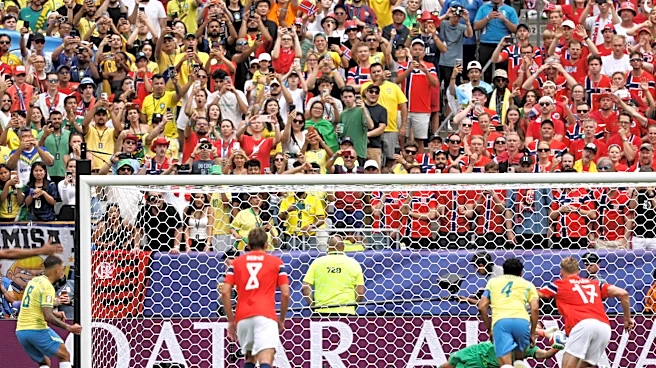
There is no moment in sports more psychologically intense than a penalty kick. Awarded for a significant foul inside the penalty box, it pits one player against one goalkeeper from just 12 yards out. All other players must stay outside the box, creating a dramatic, isolated duel. When a major match is tied after extra time, the winner is decided by a series of these kicks, known as a penalty shootout. The tension is almost unbearable. It’s a test of nerve, skill, and luck that creates instant heroes and villains and has decided numerous World Cup finals. For a new fan, the raw emotion of a penalty is universally understood.
The Throw-In: Deceptively Simple, Tactically Deep
The most common dead-ball situation is the throw-in, which occurs when the ball goes out of bounds on the sidelines. It seems simple—a player just throws the ball back into play. But even this simple act is filled with strategy. A quick throw can catch a defense off guard and launch a fast attack. In the attacking third of the field, a player with a particularly long throw can essentially turn it into a corner kick, hurling the ball directly into the danger zone in front of the goal. It reinforces the core idea: in soccer, every stoppage is an opportunity, and no moment is ever truly wasted.