




The Science of ‘Nose Blindness’
Have you ever applied a fragrance and found that you can no longer smell it after just a few minutes? You haven’t gone crazy, and the scent hasn't vanished. You're experiencing olfactory fatigue, also known as “nose blindness.” This is a natural, temporary
adaptation where your brain filters out a constant, non-threatening smell to keep your senses alert for new stimuli. It’s an evolutionary survival mechanism. The problem is, while you can no longer smell your perfume, everyone around you still can. This disconnect is why people often make the mistake of reapplying, thinking their scent has faded when, in reality, they're creating an overwhelming cloud of fragrance.
Projection vs. Sillage: The Scent Bubble
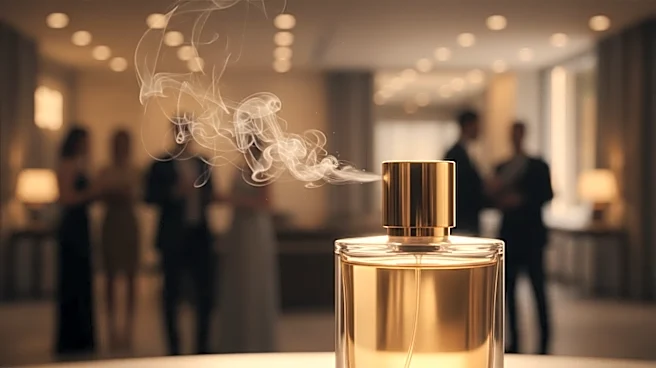
To master fragrance, it helps to know two key terms: projection and sillage. Projection is the scent bubble that radiates around you when you’re stationary. Sillage, from the French word for “wake,” is the trail your scent leaves behind as you move. A fragrance with massive projection can feel invasive in a crowded space, like an announcement that enters the room before you do. A heavy sillage can be equally disruptive. The goal isn't to create a scent that can be detected from across the room. A more refined approach is to have a scent that stays closer to the skin, creating a personal aura rather than a public broadcast. This subtle approach respects shared spaces like offices and public transit, where strong smells can be irritating or even trigger allergies for others.
The Psychology of Intrigue
There is a powerful psychological advantage to a subtle scent. A fragrance that screams for attention is often perceived, consciously or not, as trying too hard. In contrast, a scent that is only discovered when someone enters your personal space—about an arm's length away—creates a sense of intimacy and intrigue. It becomes a discovery, a pleasant surprise that draws people closer rather than pushing them away. Scent is deeply linked to memory and emotion, more so than any other sense, because it connects directly to the brain's limbic system. A subtle, unique fragrance makes a more memorable and positive impression, becoming a part of your identity that lingers in someone’s memory.
How to Apply for a Subtle Impression
Mastering the art of fragrance is all about application. The mantra is “less is more.” One or two sprays are almost always enough. Apply the fragrance to pulse points, where your body is naturally warmer—such as the wrists, the sides of the neck, and behind the ears. This heat helps to gently diffuse the scent throughout the day. Crucially, don’t rub your wrists together after applying; this can crush the delicate scent molecules and alter the fragrance. For an even lighter touch, you can use the “cloud” technique: spray once into the air in front of you and walk through the mist. This allows the fragrance to settle lightly and evenly over you, creating the perfect subtle effect.