



The Rise of the Set-Piece Coach
In modern soccer, very little is left to chance. While goals from corners are statistically rare—studies show conversion rates hover between just 2-4%—they still account for a significant percentage of total goals scored and can often decide tight matches.
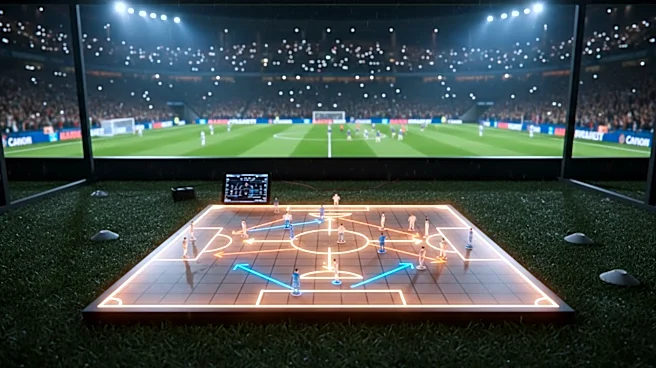
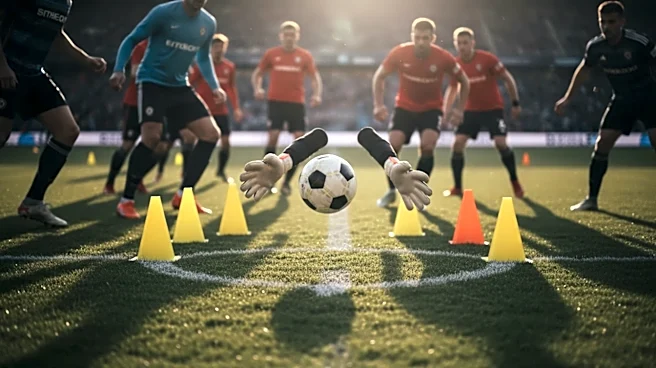
This has led to the rise of a new, highly specialized role on the coaching staff: the set-piece coach. These specialists spend hours analyzing video of their own team and opponents, looking for weaknesses to exploit. They design and drill specific routines for corners, free kicks, and even throw-ins, turning what was once an afterthought into a major tactical battleground. The gesticulating figure that pops up in the technical area whenever a corner is awarded isn't just excited; they're activating a specific, practiced play.
The Language of Delivery
The plan begins with the kick itself. The taker isn't just aimlessly kicking the ball toward the goal; the type of delivery is the first part of the strategy. An "inswinger" is a kick that curls in toward the goal, which is dangerous because any touch can redirect it into the net, but it also brings the defending goalkeeper more into play. An "outswinger" curls away from the goal, which makes it harder for the keeper to intercept and allows attackers to run onto the ball with more power. Then there are driven, lower-trajectory crosses aimed at the near post, or lofted balls to the far post for the team's best headers. Each type of kick is designed to attack a specific area or exploit a certain defensive setup.
A Cast of Characters
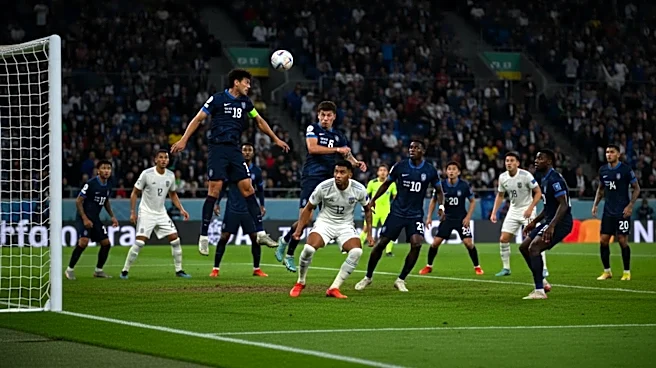
Each player in the box has a specific job. There are the primary targets, usually the team's tallest and best headers, who are meant to attack the ball directly. Then there are the screeners or blockers, whose job is to get in the way of key defenders—or the goalkeeper—to create space for the primary targets. You'll also see players lurking in different zones: one at the near post for a potential flick-on header, another at the far post, and a player positioned at the edge of the penalty area, waiting for a rebound or a cleared ball to hit on the volley. It's a coordinated effort to create a high-percentage scoring chance from a low-percentage situation.
The Attacking Playbook
Teams drill a variety of routines. One common play is the "short corner," where the kicker passes the ball to a nearby teammate instead of crossing it into the box. The goal is to draw defenders out of their organized shape, creating a better angle for a cross or a pass into a less crowded penalty area. Another popular tactic is to "stack" attackers in a line and have them break in different directions as the ball is kicked, causing confusion for defenders trying to track their assigned man. Some teams will place a player directly in front of the goalkeeper to disrupt their vision and movement, while others might focus all their runs toward the near post, hoping for a flick-on to a player arriving late at the back post.
The Defensive Chess Match
Of course, for every attacking plan, there is a defensive counter. The two primary strategies for defending corners are man-marking and zonal marking. In man-marking, each defender is assigned a specific attacker and is responsible for staying with them. In zonal marking, defenders are assigned a specific area of the penalty box and are responsible for clearing any ball that enters their zone. Most teams today use a hybrid system, combining both approaches—a few players mark key opposition threats, while others guard crucial spaces like the six-yard box and near post. The entire sequence is a high-speed chess match, with both sides trying to outwit the other in a matter of seconds.