




Hollywood's New Power Duo
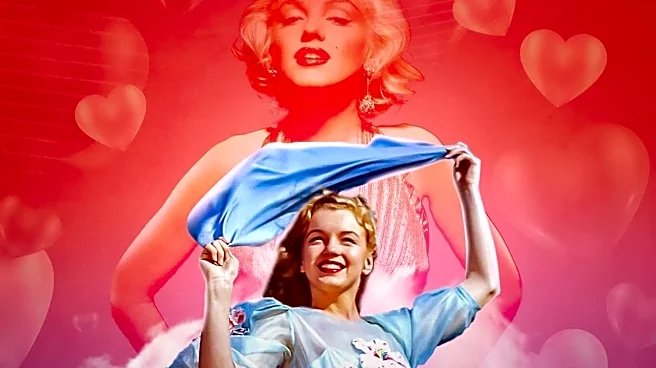
In 1953, 20th Century Fox was mounting a lavish Technicolor production of Gentlemen Prefer Blondes. The studio cast Marilyn Monroe, a rapidly ascending star, as the diamond-obsessed Lorelei Lee. But they needed a powerful counterpart for the sharp-witted
Dorothy Shaw. The role went to Jane Russell, an established star known for her sardonic humor and commanding presence. On paper, the press anticipated a rivalry between the two bombshells. In reality, the opposite happened. Russell, the more seasoned veteran, took Monroe under her wing, helping the notoriously anxious actress navigate the pressures of a major production. Russell would often coax a nervous Monroe from her dressing room onto the set, and a genuine friendship blossomed between the two.
A Tale of Two Salaries
Despite their on-screen parity, the financial arrangement was anything but equal. Jane Russell, a major box-office draw, commanded a salary reportedly around $200,000 for the film. Monroe, despite her growing fame, was still locked into an old contract with Fox, earning a mere fraction of that—some reports say as little as $500 or $1,500 a week. This massive pay disparity became a point of contention, not between the actresses, but for the studio. Fox executives, always watching the bottom line, saw an opportunity to cut costs. The narrative, though hard to definitively confirm with studio records, is that they considered replacing the high-priced Russell with a cheaper alternative.
Monroe Draws a Line in the Sand
When Monroe reportedly got wind of the studio's plan to drop Russell, she refused to accept it. She recognized that the film's magic relied on their specific chemistry. Without Russell as the grounded, earthy Dorothy, her airy, whimsical Lorelei wouldn't work. Demonstrating a professional clout that few knew she possessed, Monroe made her position clear: without Jane Russell, there would be no Marilyn Monroe. She flatly told executives she would not make the movie with anyone else. It was an enormous risk for an actress whose own relationship with studio head Darryl F. Zanuck was often fraught. But Monroe understood her value. She was the 'Blonde' in Gentlemen Prefer Blondes, and her loyalty to her friend and co-star was non-negotiable.
A Friendship Forged in Defiance
Faced with losing their irreplaceable lead, the studio backed down. Jane Russell stayed, and the film went on to become an iconic smash hit, cementing both women as legends and turning Monroe into a global superstar. Their on-screen friendship, a portrait of unwavering female solidarity, was a direct reflection of their real-life bond. Years later, in one of her final interviews, Monroe remembered Russell's impact on her during that time, stating simply, "She was quite wonderful to me." This incident is more than just a piece of Hollywood trivia; it rewrites the simplistic narrative of Monroe as a perpetual victim. It shows her as a principled professional who fought for her collaborators and understood the alchemy of a perfect performance, even when the money men didn't.