

From Arena Tour to Festival Sprint
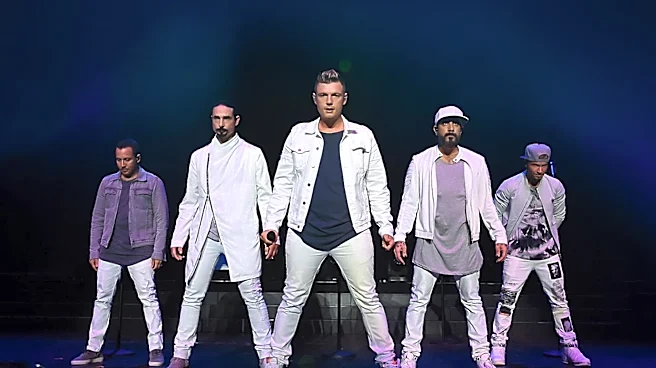
An artist’s headlining tour is a marathon, meticulously designed for a custom-built stage that travels with them. A festival set, by contrast, is a sprint on borrowed land. Choreographers are the first to feel this pressure. The expansive formations and complex
transitions that look incredible on a 60-foot main stage suddenly become impossible on a smaller, shared festival platform. The first step is triage. Choreographers must decide what to cut, what to keep, and what to completely re-stage. This often means reducing the number of dancers, simplifying pathways, and ensuring every movement reads clearly from all angles of a new venue. It’s a process of distillation, boiling a 90-minute narrative down to its most impactful moments. The goal is to preserve the spirit and energy of the original choreography while making it functional and safe for an unfamiliar space with limited on-stage rehearsal time.
Dancing for the Cameras, Not Just the Crowd
At a major broadcast event like the iHeartRadio Festival, the most important audience member is the camera. While a live audience sees the whole picture, millions of viewers at home see only what the director chooses. This completely changes the choreographic priority. Movements must be tailored for a variety of shots, from sweeping wide angles to intimate close-ups. A subtle gesture or facial expression that would be lost in a stadium can become a powerful, memorable moment on screen. Choreographers work to create these “camera moments,” knowing that an edit can turn a hand gesture into the defining image of the performance. This requires a different type of performance energy; instead of just projecting to the back row, dancers must deliver a more nuanced, intimate performance for the lens.
The Art of Recalibration
Beyond spacing and camera angles, choreographers must manage the artist’s energy. A festival set is often one of many obligations in a packed day of press and appearances. The artist can't afford to burn out on the first song. Choreographers often have to adjust the physical intensity of a routine, swapping out taxing sequences for moves that are equally visually impressive but less demanding. This might involve building in moments of relative stillness, relying more on group dynamics to create visual impact, or modifying footwork to be less strenuous. The rehearsal process is key, focusing on muscle memory so the performance becomes automatic, allowing the artist to focus on connecting with the audience rather than worrying about the steps.
The High-Pressure Finish Line
Unlike a tour where a show is perfected over dozens of nights, festival preparation is condensed and chaotic. Artists and their teams may only get a brief soundcheck and a quick walkthrough on the actual stage. This means choreographers and dancers must be incredibly precise and adaptable. Much of the adaptation happens in off-site rehearsal studios, using tape on the floor to mark the new stage dimensions. By the time they arrive at the festival, the reworked routine needs to be second nature. The process is a testament to the choreographer's ability to think on their feet, solving spatial, technical, and storytelling problems all at once to create a seamless spectacle that lights up both the stage and the screen.