






The Meticulous Visionary
One way to keep big performances in check is to build a world so specific that the actors have no choice but to conform to its rules. This is the Wes Anderson method. His films, like "The Grand Budapest Hotel" and "The French Dispatch," are known for their
symmetrical compositions, precise color palettes, and recurring troupe of actors. The performance isn't about an actor's individual flourish; it's about how perfectly they fit into Anderson's meticulously crafted diorama. The style itself becomes the great equalizer. The restraint comes not from telling a star to tone it down, but by creating a visual and narrative language so strong that every actor, no matter how famous, becomes a piece of the larger, whimsical puzzle.
Let the Story Be the Star
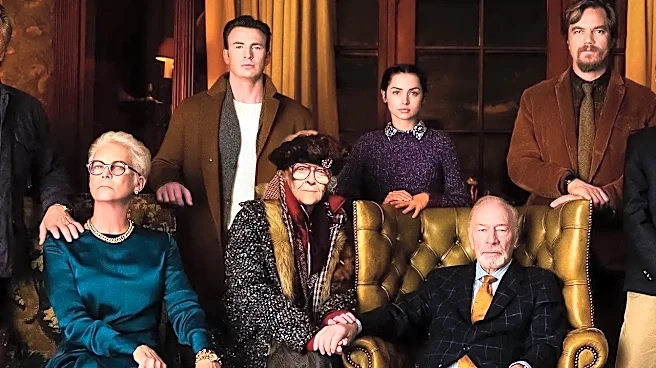
Another powerful tool in a director's kit is a script that is simply undeniable. When the story is the main attraction, actors are more willing to serve it. Rian Johnson's "Knives Out" is a perfect example. The film boasts a massive ensemble cast, but the intricate murder-mystery plot is the real star. Johnson’s screenplay gives each character a specific, crucial role in the whodunit, ensuring that even smaller parts feel essential. By focusing everyone’s energy on solving the puzzle of the narrative, the director ensures no single performance can overpower the delicate machinery of the plot. The goal becomes a collective one: to execute the story’s twists and turns with precision, rather than competing for the most memorable moment.
The 'No-Star' Set Philosophy
Some directors build a collaborative environment where on-set hierarchy disappears. Steven Soderbergh is a master of this approach, particularly evident in his "Ocean's" trilogy. Despite juggling a roster of Hollywood's biggest names, Soderbergh is known for creating an efficient, breezy, and professional atmosphere where the work is the focus. This often involves treating every actor equally, from contract negotiations to on-set amenities. By establishing clear expectations and fostering a sense of a team pulling in the same direction, the director pre-emptively dismantles the ego issues that can plague a star-heavy set. The message is clear: we're all here to do a job, and no one is more important than the film itself.
The Maestro of Controlled Chaos
Then there are the directors who don't restrain performances so much as channel them into a chaotic, realistic symphony. Robert Altman was the pioneer of this style, famously encouraging overlapping dialogue and improvisation in films like "Nashville." This technique creates a documentary-like feel, as if the audience is dropping in on real conversations. To manage this, Altman gave individual microphones to each actor, allowing sound mixers to orchestrate the chaos in post-production, highlighting the crucial lines of dialogue while letting others fade into a natural murmur. More recently, directors like Adam McKay have used a similar approach in films like "Don't Look Up," allowing improvisation to flourish within a structured story. This method trusts the actors immensely but gives the director the ultimate power to shape the final performance in the edit.