










The Tyranny of Optimized Leisure
We live in an age of digital overload, where every ping and notification triggers a low-level stress response. This state of constant partial attention leaves our brains perpetually switched on, leading to what experts call 'digital burnout'—a pervasive
mental exhaustion that a good night's sleep can't fix. Our leisure time has become another frontier for optimization. Streaming services present us with a paralyzing infinity of choices, while social media creates a sense of obligation to keep up with the latest prestige drama or viral phenomenon. Entertainment has become another task on the to-do list, complete with the fear of missing out and the pressure to have a well-curated opinion. The result is that we often finish a binge-watching session feeling more drained, not less.
A Quieter Kind of Fun
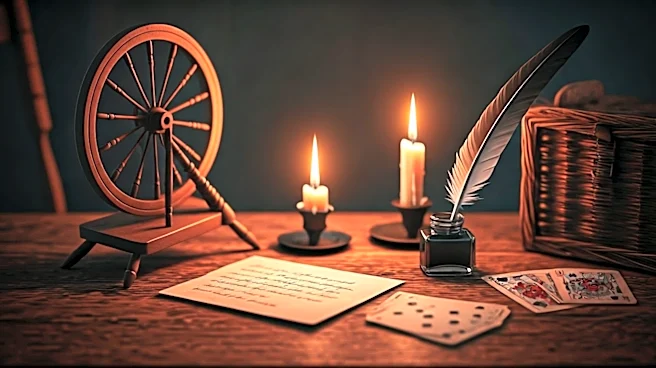
Now, let’s rewind the clock to a time before Wi-Fi, notifications, and algorithmic recommendations. In 18th-century America, entertainment was, by necessity, a simpler affair. Leisure was woven into the fabric of daily life rather than being a separate, demanding category. People found amusement in activities that were communal, analog, and often productive. Evenings might be spent reading aloud, playing cards or board games like chess and backgammon, or making music together. Letter writing was not just a means of communication but a celebrated art form, as seen in the voluminous correspondence of figures like John and Abigail Adams. Other popular pastimes included dancing, gardening, and gathering in taverns for games and conversation. While some spectator sports existed, like horse racing and traveling shows, much of the entertainment was self-made and participatory.
The Soothing Power of Low Stakes
Herein lies the appeal for our modern, exhausted minds. The core quality of Founding-Era entertainment is that it is fundamentally low-stakes. These activities offer engagement without demanding mastery. There is no complex lore to memorize, no cliffhanger designed to hijack your sleep schedule, and no online discourse to navigate. When you play a game of checkers, write a letter to a friend, or simply sing songs with family, you are fully present in a single, focused activity. This type of entertainment calms the nervous system rather than stimulating it further. It provides the satisfaction of a completed task and a tangible connection with others, things often missing from our digital pursuits. It’s the difference between passively consuming content and actively creating a moment of genuine, shared enjoyment.
Finding Your Inner Ben Franklin
Embracing this ethos doesn't require churning your own butter or abandoning electricity. It's about consciously choosing to unplug and rediscover the joy of simple, tactile pleasures. It might mean organizing a regular board game night with friends, a modern echo of the card games played in colonial taverns. It could be picking up a pen to write a physical letter instead of firing off another email. Perhaps it's spending an afternoon gardening, an activity cherished by figures like George Washington and Thomas Jefferson for its grounding, rational amusement. The goal isn't to perfectly replicate the past, but to borrow its wisdom. It's about realizing that sometimes the most restorative thing you can do is engage in an activity that requires nothing but your presence and a willingness to connect in a simple, human way.