



The Promise of a Golden Generation
In international soccer, no phrase is more loaded with hope and dread than the “Golden Generation.” It describes that rare moment when a nation produces a cluster of world-class players simultaneously. Suddenly, a country that was once a plucky underdog
or a mid-tier contender is spoken of in hushed, reverent tones. Pundits circle their names on whiteboards, fans fantasize about parade routes, and a nation holds its breath, convinced that destiny has finally arrived. This isn’t just about having one or two great players. It’s about having a spine of elite talent across the pitch—a visionary midfielder, a clinical striker, a rock-solid defender, and a world-beating goalkeeper. This confluence of greatness creates an almost unbearable weight of expectation. The narrative shifts from “we hope to compete” to “we must win.” Anything less than a major trophy—a World Cup or a continental championship—is framed not just as a disappointment, but as a monumental failure, a squandering of a historic gift.
Case Study in Heartbreak: England’s 2000s
For American fans who fell in love with soccer through the Premier League, England’s Golden Generation of the 2000s is the textbook example. The roster was a who’s who of global superstars: David Beckham, Steven Gerrard, Frank Lampard, Paul Scholes, Wayne Rooney, Rio Ferdinand, John Terry. Individually, they were champions, dominating for clubs like Manchester United, Chelsea, and Liverpool. Together, for England, they were a puzzle that no manager could solve. From 2002 to 2006, their story was one of agonizing repetition: a string of quarter-final exits, often on the cruelest of margins via penalty shootouts. The talent was undeniable, but the chemistry wasn't. Debates raged endlessly: Could Gerrard and Lampard, two of the world's best midfielders, actually play together? Was the immense pressure from the British press simply too much to bear? Instead of a triumphant coronation, their era is remembered for what-ifs and tactical frustration. It was a period of unprecedented individual talent that yielded profoundly ordinary team results, making the failure feel all the more personal for the fans who believed so deeply.
So Close, Yet So Far: The Belgian Paradox
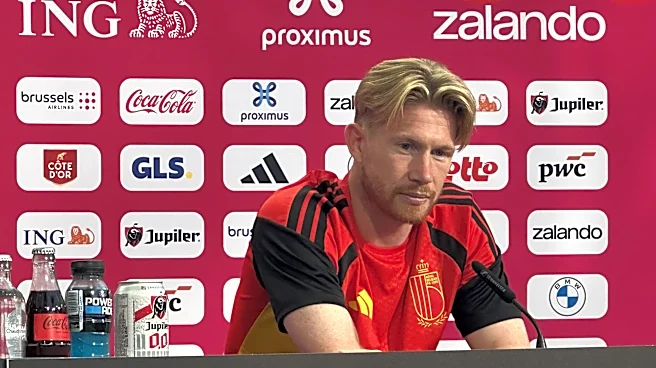
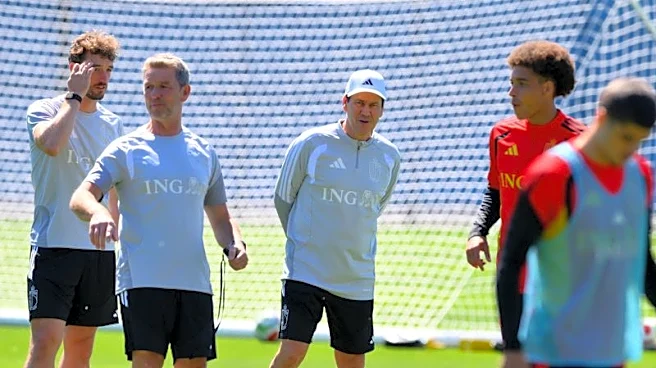
More recently, Belgium provided a masterclass in this painful paradox. For years, the Belgian Red Devils were the undisputed kings of potential. Their lineup read like a fantasy team sheet: Kevin De Bruyne, Eden Hazard, Romelu Lukaku, Thibaut Courtois, Vincent Kompany. From 2018 to 2022, they spent the majority of their time ranked No. 1 in the world by FIFA. By any objective measure, this was the greatest period in the nation’s soccer history. They achieved a third-place finish at the 2018 World Cup, their best-ever result. And yet, the era is almost universally seen as a disappointment. Why? Because the ultimate prize remained elusive. Their peak performance in 2018 ended with a narrow 1-0 semi-final loss to eventual champions France. At Euro 2020, they were knocked out by Italy. By the 2022 World Cup, the generation had aged, the magic had faded, and they crashed out in the group stage. The bronze medal from 2018 isn't a failure, but it feels like one when the expectation was gold. The years spent at No. 1 feel hollow without a trophy to show for it. It’s the pain of being good enough to dominate, but never on the one day it mattered most.
The Psychology of Unfulfilled Potential
The sting of a Golden Generation’s failure comes down to a simple, brutal psychological truth: the pain of unfulfilled potential often hurts more than the pain of outright mediocrity. When your team is an underdog, every small victory is a joy, and an early exit is expected. There is honor in a valiant effort against a superior foe. But when your team is the superior foe, the dynamic inverts. Success becomes the baseline, and anything less is a catastrophe. It’s not about losing; it’s about the gnawing feeling that you beat yourselves. It’s the memory of a missed chance, a questionable substitution, or a moment of tactical inflexibility that replays in the minds of fans for decades. The Dutch teams of the 1970s, which revolutionized the sport with “Total Football” but lost two consecutive World Cup finals, are still spoken of with a mix of awe and melancholy. They gave the world a new way to see the game, but they couldn't give their own country the one thing it craved.