


The Brain's Terrifying Imagination
The core principle of effective horror sound design is suggestion. Visual effects are expensive; showing a fully rendered monster or a catastrophic event costs a fortune. Hearing it, however, is cheap, and arguably more effective. Sound designers know
that the human brain is wired to fill in the blanks. An unidentifiable scratching sound from a dark corner isn't just a noise; it's a trigger. Your mind does the heavy lifting, picturing a creature far more specific and terrifying to you than any CGI artist could create for a mass audience. This is the art of making the audience complicit in their own fear. Sound designers don't create the monster, they create the space for the monster to exist in your head. They provide the audio cues, and your survival instincts do the rest, a phenomenon that taps into our evolutionary response to danger.
Building Worlds with Noise
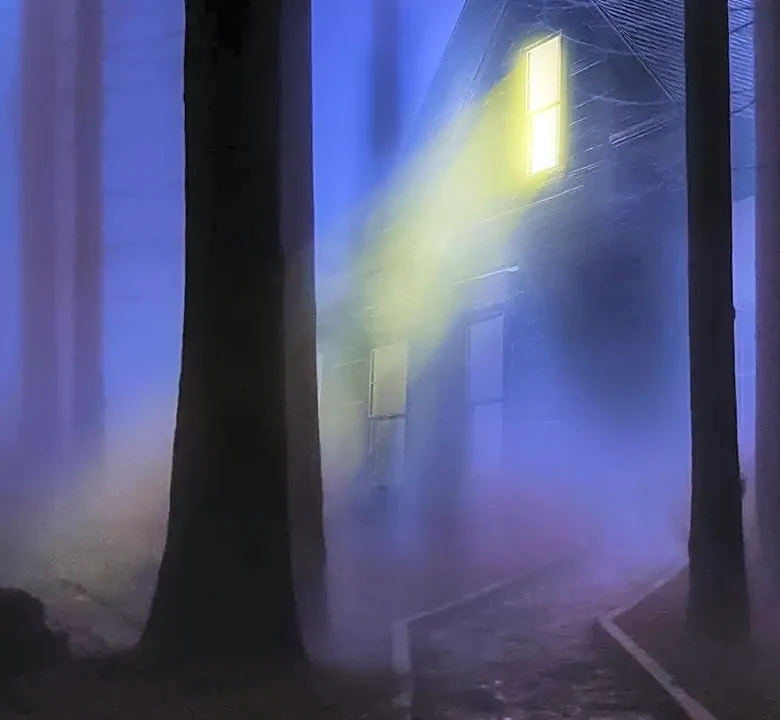
Long before a scare happens, sound is busy building the world. A sound designer for a Halloween special is responsible for the entire aural texture of the environment. This isn't just about spooky music. It's the low, almost imperceptible hum of a faulty fluorescent light in a supposedly empty school. It’s the sound of wind that feels a little too much like a whisper. These ambient sounds, or “backgrounds,” establish a baseline of what is normal for a scene. The true artistry comes from subtly violating that normal. A sudden stop in the chirping of crickets, for instance, implies a predator is near. By establishing an environment and then disrupting it, sound designers can create a profound sense of unease long before any character is in obvious danger. They make the setting itself feel like a threat.
The Power of Unnatural Sounds
Some of the most effective horror sounds are born from twisting the familiar into something alien. Foley artists, the craftspeople who create everyday sounds like footsteps and cloth rustling, are masters of this. For a horror production, their job becomes beautifully warped. The snap of a celery stalk can become breaking bones. A wet cloth dropping on a surface becomes the sound of gore. The sound designer then takes these organic recordings and manipulates them further. By distorting a familiar sound, like a human voice, by slowing it down or altering its pitch, it becomes deeply unsettling because our brains recognize it as something that should be normal but isn't. This distortion makes the world of the show feel fundamentally wrong, creating a psychological dread that visuals alone often can't match.
Weaponizing Silence and Frequency
Often, the most terrifying sound is no sound at all. The sudden, complete absence of noise after a chaotic scene is a classic tool to build unbearable tension. Your ears strain to hear what comes next, making you hyper-aware and vulnerable. This quiet is the perfect setup for the jump scare, a loud, abrupt sound designed to trigger your body’s acoustic startle reflex. Because sound can reach the brain and trigger a physical reaction faster than visuals, a well-timed audio shock is physically impossible to ignore. Beyond silence, designers use frequencies to create a physical sense of fear. Infrasound, a very low-frequency sound that is often felt more than heard, can create feelings of anxiety and dread. This is because in nature, low-frequency rumbles are associated with large predators or natural disasters. By subtly layering these frequencies into the soundtrack, a designer can make an audience feel that something is deeply wrong on a primal level.