


The CMA Awards are country music’s biggest night, a television spectacle built on star power and showmanship. But beyond the trophies and speeches, the performance lineup itself tells a story. What does this year's slate say about country's live sound?
Arena Rock Energy Takes Center Stage
This year's lineup was heavy on artists known for high-energy, stadium-sized shows. With performers like Luke Combs, HARDY, and Lainey Wilson on the bill, the broadcast often felt more like a rock concert than a traditional Nashville revue. These artists have built their careers on relentless touring, and their live sound reflects it: thunderous drums, heavy guitar riffs, and choruses designed to be screamed back by 50,000 people. This isn't an accident; it's a direct reflection of country's surging commercial power. The genre's growth on streaming and its ability to pack arenas means that for many top-tier acts, the 'live sound' is now synonymous with a massive, production-heavy experience. The tribute to Brooks & Dunn, featuring rock acts like Halestorm alongside country stars, further cemented this trend, celebrating a duo that helped pioneer country's arena-rock sound decades ago.
The Neotraditionalist Counterpoint
For all the loud guitars, the 2026 lineup also made significant room for a powerful counter-narrative: the resurgence of traditional country. The inclusion of artists like Zach Top and The Red Clay Strays, whose sounds are steeped in classic fiddle, steel guitar, and earnest storytelling, is one of the most important developments in the genre. Newcomer Ella Langley, who entered the night with a record-tying nine nominations, has built a massive following by blending modern emotional honesty with a classic country sonic palette. These performers offered a different kind of live intensity—one grounded in lyrical substance and raw vocal delivery rather than pyrotechnics. Their presence wasn't just a token nod to the past; it was a reflection of a genuine, fan-driven hunger for roots-oriented music that streaming platforms have helped cultivate.
Collaborations as a Sonic Playground
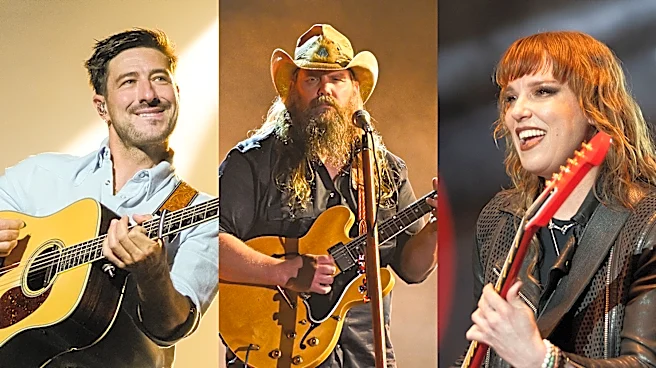
Cross-genre collaborations have become a staple of awards shows, but this year's pairings felt particularly revealing. The performance by British folk-rockers Mumford & Sons with Chris Stapleton showcased a shared space of roots-music authenticity and powerful vocals. Stapleton's second team-up, with the genre-bending Stephen Wilson Jr., highlighted a more experimental, soulful edge. These moments demonstrate that country's borders are more porous than ever. They also reflect a modern music landscape where viral moments and unexpected pairings can redefine an artist's reach overnight. The much-discussed duet between Miranda Lambert and Kacey Musgraves was another key moment, representing a collaboration built on shared artistic history and narrative power. These weren't just about grabbing headlines; they were about exploring the sonic spaces where country overlaps with folk, rock, and soul.
A Stage for Every Kind of Story
Ultimately, the 2026 CMA Awards performances painted a picture of a genre comfortable with its own contradictions. The live sound of country music today isn't one thing; it's a dynamic spectrum. On one end, you have the slick, muscular production of arena headliners who have mastered the art of the large scale spectacle. On the other, you have a growing movement of artists who are finding success by deliberately turning down the volume and focusing on the craft of the song. The inclusion of legends like Tim McGraw and Vince Gill, alongside viral new acts like Tucker Wetmore, shows a genre that respects its elders while making room for its TikTok savvy newcomers. The stage was big enough to hold both the explosive energy of a rock show and the quiet intimacy of a songwriter's circle.