




1. The Grand Experiment (1930)
Before it was a global monolith, the World Cup was a wild idea. In 1930, FIFA president Jules Rimet convinced a handful of nations to travel to Uruguay for the inaugural tournament. Only 13 teams participated, with just four from Europe making the multi-week
boat journey. The logistics were a nightmare, but the vision was clear: create a global championship for the world's most popular sport. Host nation Uruguay, then a dominant force in world football, defeated Argentina 4-2 in a chaotic final in Montevideo. It was a modest, rugged, and deeply controversial beginning, but it established a principle that endures today: for one month every four years, the world stops for football.
2. The Miracle on Grass (1950)
For many Americans, this is the most important forgotten moment in U.S. sports history. At the 1950 World Cup in Brazil, a team of American part-timers—a mailman, a hearse driver, a teacher—faced the mighty English, the self-proclaimed “Kings of Football.” England was making its World Cup debut and was the tournament favorite. What happened next was unthinkable. In one of the greatest upsets in sports history, the United States won 1-0 thanks to a goal from Joe Gaetjens. The result was so shocking that some newspaper editors in London allegedly assumed the telegram report was a typo and printed the score as a 10-1 England win. The U.S. wouldn’t win another World Cup match for 44 years, but the “Miracle on Grass” proved that on any given day, anything is possible.
3. A King Is Crowned (1958)
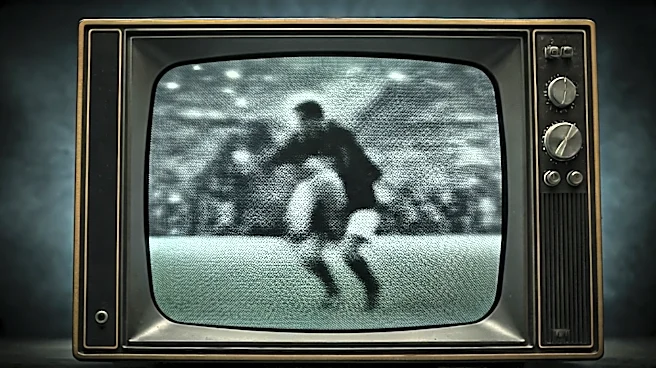
The World Cup creates legends, but in 1958, it introduced the world to a god. Held in Sweden, the tournament is remembered for one thing: the arrival of a 17-year-old Brazilian named Edson Arantes do Nascimento, better known as Pelé. He didn't start the tournament, but by the knockout stages, he was unstoppable. He scored a hat-trick in the semifinal and two more goals in the final against Sweden, including a breathtaking display of skill where he flicked the ball over a defender's head and volleyed it into the net. It was a goal that announced a new era. Brazil won its first World Cup, and Pelé became the sport's first global superstar, a symbol of joyful, brilliant football who would go on to win two more titles.
4. The Hand of God & The Goal of the Century (1986)
No single match encapsulates the beauty and controversy of the World Cup like the 1986 quarterfinal between Argentina and England. The game was politically charged, coming just four years after the Falklands War. And at its center was one man: Diego Maradona. First, he gave the world its most infamous goal, leaping to punch the ball into the net with his hand. He cheekily called it “the Hand of God.” Officials missed it. England was incensed. But just four minutes later, Maradona delivered the sublime, scoring what many call the “Goal of the Century.” He picked up the ball in his own half and slalomed through half the English team before slotting it home. In those four minutes, Maradona showcased the two sides of the game—the cheating and the genius—and cemented his own mythic status while leading Argentina to glory.
5. Soccer Comes to America (1994)
For decades, the U.S. was seen as a soccer backwater. The 1994 World Cup changed everything. Despite skepticism that Americans would embrace a sport without timeouts and with the potential for 0-0 draws, the tournament was a spectacular success. It shattered attendance records that still stand today, with passionate crowds filling massive NFL stadiums from coast to coast. For a generation of Americans, it was their first real exposure to the global passion of the sport—the colorful fans from Ireland, the brilliance of Brazil's Romário and Bebeto, and the tragic drama of Roberto Baggio's missed penalty in the final. The '94 World Cup didn't just put on a great show; it laid the foundation for Major League Soccer and the modern era of American soccer culture, paving the way for the tournament's grand return in 2026.