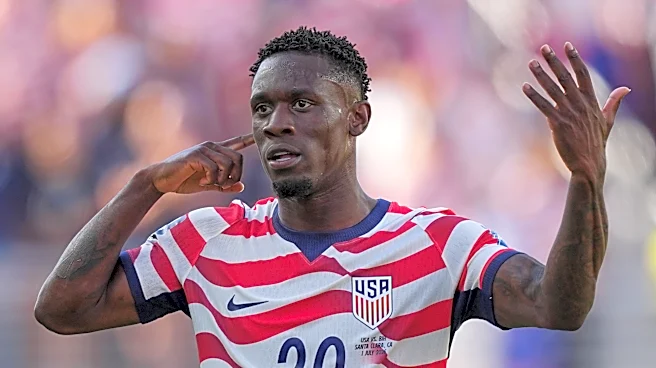









The Nation on Your Shoulders
In global soccer, the World Cup is the final exam, and it’s pass/fail. A player can spend a decade dominating Europe’s top leagues, winning countless trophies and earning hundreds of millions of dollars for their club. But if they fail to deliver for their country
on the world’s biggest stage, their legacy is forever marked with an asterisk. For years, Lionel Messi was the textbook example. He was arguably the greatest club player ever, but his inability to win a major tournament with Argentina was a constant shadow. That burden was only lifted when he finally led his nation to World Cup glory in 2022, a victory that many believe completed his legacy and cemented his place alongside legends like Pelé and Diego Maradona. This test is unique because it’s not just about winning; it’s about shouldering the hopes, history, and identity of an entire nation every four years. The pressure is immense and unforgiving.
America's Franchise-Focused Fame
Contrast that with the American sports landscape. A superstar athlete’s legacy is almost entirely defined by what they achieve for their franchise. Tom Brady’s greatness is measured in his seven Super Bowl rings, won with two different teams. His narrative is about franchise-building, clutch playoff performances, and sustained excellence within a league structure. No one seriously questions his legacy because he never won a world championship with a U.S. national American football team—because such a test doesn't meaningfully exist. Similarly, LeBron James’s career is debated through the lens of his four NBA championships with three different franchises. His Olympic gold medals are a celebrated bonus, not a core requirement for greatness. In the U.S., the league is king, and the championship is the coin of the realm.
Club vs. Country: A Structural Divide
This difference isn't arbitrary; it’s rooted in the very structure of the sports. Most of the world is organized around a club-and-country system. Players are employees of their clubs, but citizens and heroes of their nations. Soccer is intertwined with national identity in a way that is hard for many Americans to grasp. A national team’s performance can be a source of immense collective pride or shared sorrow, often reflecting broader cultural and political sentiments. American sports, on the other hand, were built around a domestic, franchise-based model. Teams are tied to cities, but they are privately owned businesses competing in a closed market. Fan loyalty is intense but directed toward a team brand, not the nation itself. The very idea of a player's primary allegiance being to their country over their multi-million dollar employer is foreign here.
The Olympic Exception (That Proves the Rule)
The closest the U.S. gets to this national-level test is the Olympics, particularly in basketball. The 1992 “Dream Team” set a standard, and ever since, there has been an expectation for American NBA stars to deliver gold. Yet, even this comes with caveats. While a gold medal adds to a player's legacy, a failure to win one doesn't erase their NBA accomplishments. No one would argue that a player with multiple NBA titles but no gold medal is a failure. For some players, winning for their country is a uniquely special achievement, perhaps even more so than an NBA ring because of its rarity. But for their overall standing in the sport's historical hierarchy, the NBA Finals remain the ultimate crucible. The Olympic tournament, while prestigious, functions more as a showcase of overwhelming talent than a genuine, legacy-defining test of character in the same way the World Cup does for a soccer star.