





The American Sports Context
In American sports, moving the ball side-to-side often carries a slightly negative connotation. Think of an NFL quarterback getting 'happy feet' and shuffling in the pocket, or a basketball offense passing lazily around the three-point line as the shot clock dwindles. It can signify a lack of aggression, an inability to penetrate the defense, or a team playing not to lose. While there’s a probing element to it—testing for weaknesses—the general fan sentiment is often one of impatience. We’re conditioned to value verticality: the deep pass, the drive to the basket, the direct assault on the goal. Lateral movement, without an obvious forward purpose, can feel like wasted energy.
Soccer's Answer: Recycling Possession
The soccer equivalent you're seeing is often called 'recycling possession'
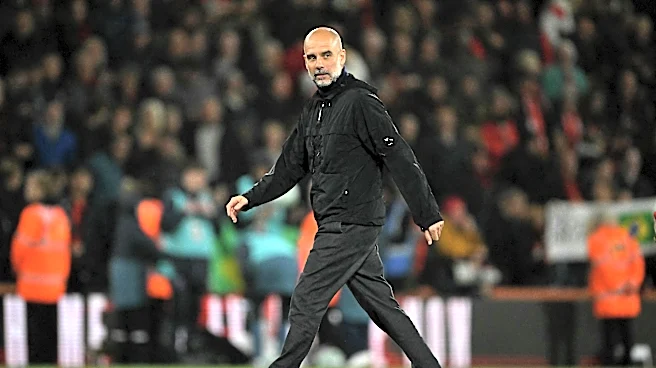
or 'switching the point of attack.' It’s that sequence of passes—often between defenders or holding midfielders—that goes from the left sideline, across the back, to the right sideline, and maybe back again. On the surface, it looks maddeningly passive. The ball isn’t getting any closer to the opponent's goal. For a new fan, it seems counterintuitive. For a frustrated fan, it feels like cowardice. But in the modern, possession-based game championed by managers like Pep Guardiola, it’s one of the most fundamental and powerful offensive tools a team has. It’s a set-up move, the strategic inhale before the explosive exhale.
The Art of Unbalancing a Defense
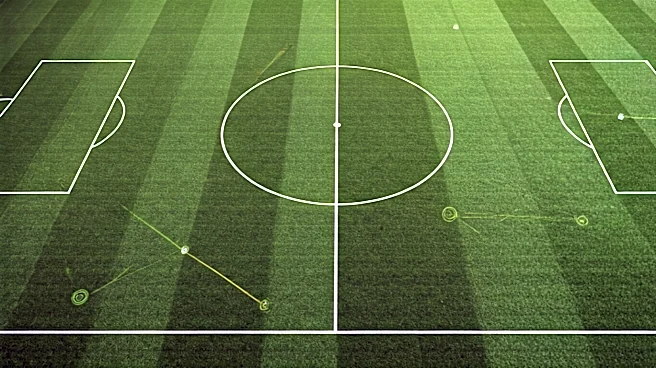
So, what’s the point? A soccer field is massive, and defending it requires immense organization and discipline. The defending team operates as a compact block, shifting in unison to deny space where the ball is. When the attacking team slowly passes the ball from one side of the field to the other, they are forcing that entire defensive block—all 10 outfield players—to shuttle across the pitch. Do this two or three times, and two things happen. First, the defenders get physically tired. Second, and more importantly, tiny gaps begin to appear. A midfielder doesn't track back fast enough. A fullback is pulled slightly out of position. The defensive chain is stretched, like pulling on a rubber band. The moment that attacking team sees a sliver of daylight, they pounce. A quick, vertical pass into the newly created space or a long, diagonal ball to a winger on the now-isolated weak side can instantly shatter the defensive structure. The slow, sideways passing wasn't the attack; it was the weapon used to create the opportunity for one.
When It Goes Wrong: Sterile Domination
Of course, your frustration isn't always misplaced. There is a 'bad' version of this, often derisively called 'sterile domination' or 'passing for passing's sake.' This happens when a team moves the ball side-to-side without any real intent. The passes are slow, nobody is making intelligent runs into space, and there’s no ambition to penetrate the opponent's defensive shape. It’s possession without purpose. In this scenario, the attacking team is simply holding onto the ball to avoid risk, allowing the defense to stay comfortable and organized. This is the true soccer equivalent of a basketball team passing around the arc with no one cutting to the hoop. The key difference between strategic recycling and sterile domination is intent and off-ball movement. Is the team moving the defense to create a specific opening, or are they just hoping something happens?