




Accessories Are Finishers, Not Fixers
Think of accessories as the punctuation on a sentence, not the sentence itself. They are meant to enhance, support, and complete an outfit—not rescue it. If the core components of your look aren't working, no amount of jewelry or scarves can solve the underlying
problem. Piling on more items often just creates visual clutter, making it obvious you're trying to compensate for something. The issue isn't a lack of a necklace; it's likely a problem with the outfit's foundation. Instead of asking, 'What can I add?,' the better question is often, 'What is fundamentally off here?'.
First, Check Your Proportions
Before you blame your accessories, look at your silhouette. The relationship between the shapes and volumes of your clothes is called proportion, and it's usually the main reason an outfit feels 'off'. A look where everything is baggy can feel shapeless, while an outfit where everything is tight can fall flat. Great style often comes from creating balance and contrast: pairing a voluminous top with slim-fit pants, or cinching an oversized blazer with a belt to define your waist. If the proportions are wrong, the outfit won't have a clear focal point, and adding a small accessory is like putting a perfect cherry on a lopsided cake.
Assess the Fit and Fabric
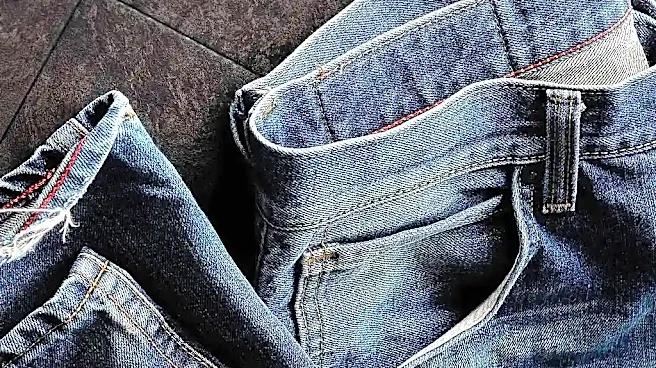
An outfit can also feel unfinished if the fit is poor or the textures are one-dimensional. A garment that pulls, bunches, or restricts your movement will always look awkward, no matter how well you accessorize it. A proper fit should follow your body's natural lines, creating a clean, harmonious silhouette that feels intentional. Similarly, an outfit made entirely of smooth, flat fabrics can lack depth. Mixing textures—like a ribbed knit with structured wool trousers, or a silk top with denim—adds visual interest that makes a look feel more considered and complete without needing extra jewelry.
Choose One Strong Statement
Instead of adding several small, competing items, a more effective strategy is to build a look around a single focal point. This 'hero piece' could be a tailored blazer, a striking pair of shoes, a beautifully structured bag, or one standout accessory. Once you have your star, let everything else play a supporting role. One strong, sculptural earring can have more impact than five average ones combined. This approach forces you to be intentional. Ask yourself what each piece is adding. If it doesn't serve a clear purpose—like balancing proportions, tying colors together, or adding a specific texture—it might just be noise.
Embrace the Art of Subtraction
There's a reason stylists have long referenced Coco Chanel's famous (though possibly misattributed) advice: 'Before you leave the house, look in the mirror and take one thing off.' This isn't just about minimalism; it's about editing. When an outfit feels too busy or still isn't working, the most powerful move can be to remove an element rather than add another. This act of subtraction forces clarity. It helps you identify the pieces that are truly essential to the look and which ones are just contributing to the chaos. Sometimes, the most elegant statement is restraint.