






The Anatomy of an Ovation
First, let's be clear: a standing ovation feels incredible. For the cast and creators who have poured years into a project, seeing a room full of people leap to their feet is a powerful, emotional reward. In high-stakes environments like the Cannes Film
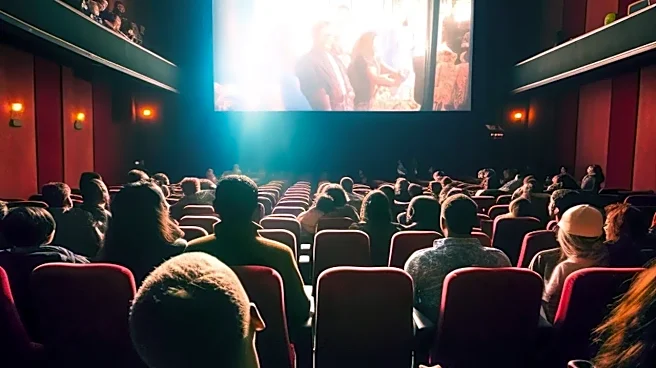
Festival or a Broadway opening, journalists now time these ovations with stopwatches. Was it a polite four-minute clap or a record-shattering 22-minute spectacle like the one for 'Pan's Labyrinth'? But the ovation itself is a form of performance. The audience, often composed of industry peers, journalists, and die-hard fans, is aware they are part of the story. Applauding becomes a signal—of respect for a director's career, of shared artistic taste, or simply of being caught up in a very exclusive, very emotional moment. It's less a consumer verdict and more a social ritual inside a very specific bubble.
The Festival Bubble Effect
That bubble is key. The audience at a major film festival is not a sample of the American public. You won't find a family of four deciding if the movie is worth the cost of tickets, popcorn, and a babysitter. Instead, the room is filled with critics who appreciate challenging art, distributors looking for the next breakout hit, and cinephiles who flew across the world to be there. Their tolerance for ambiguity, body horror, or dense historical epics is, to put it mildly, higher than average. This creates a hothouse environment where a film's merits are judged on a completely different scale. Social conformity also plays a huge role; when a few influential people stand, many others follow, not wanting to seem out of step. It's a powerful cocktail of genuine emotion and peer pressure, and it has almost nothing to do with what plays in Peoria.
From Applause to Anemic Ticket Sales
History is littered with films that won the ovation but lost the war for public attention. In 2023, the HBO series 'The Idol' received a five-minute standing ovation at Cannes, only to be met with scathing reviews and audience ridicule upon its release. Years earlier, Lee Daniels' 'The Paperboy' earned a similar festival reception before bombing at the box office and dividing critics, many of whom found it a chaotic mess. More recently, David Cronenberg’s ‘Crimes of the Future’ enjoyed a six-minute ovation from the festival crowd in 2022 but grossed a mere $4.5 million worldwide. In each case, the very elements that made the films exciting to a niche festival audience—provocation, artistic risk, or genre-bending weirdness—were the same things that made them a tough sell for mainstream moviegoers.
The Real World's Vote
Broad audience demand is a far more complex and brutal calculus. It’s driven by marketing, star power, release dates, and, most importantly, genuine word-of-mouth. While a festival ovation is a one-time event, true success is built over weeks, through conversations between friends and neighbors. Did the trailer grab you? Do you recognize the stars? Is the story something that connects on a universal level? These are the questions that determine whether a film becomes a cultural phenomenon or a forgotten festival darling. Sometimes, a movie gets both, like 'Pan's Labyrinth' or 'Fahrenheit 9/11', which followed up huge ovations with box office success and cultural impact. But they are the exceptions that prove the rule. Research has found no meaningful correlation between the length of a standing ovation and a film's eventual box office haul or awards success.