


A Cinderella Story with an Asterisk
The 2002 FIFA World Cup, the first ever held in Asia, was defined by the incredible run of co-hosts South Korea. Under Dutch coach Guus Hiddink, the Taeguk Warriors played with relentless energy, capturing the hearts of their nation. Their journey to
the quarter-finals, however, was already marred by controversy. Their knockout stage began with a victory over Italy in a match where the Italians were left fuming over a questionable red card and a disallowed golden goal. This set the stage for a showdown with Spain, a talented squad desperate to overcome its history of quarter-final exits at major tournaments. The atmosphere in Gwangju was electric, but few could have predicted the level of drama that would unfold.
The First Disallowed Goal
Spain appeared to take the lead early in the second half. A Spanish free-kick was floated into the penalty area, and the ball deflected off a South Korean defender and into the net for what looked like an own goal. However, the celebration was cut short by the whistle of Egyptian referee Gamal Al-Ghandour. He disallowed the goal, citing a foul for shirt-pulling by Spanish player Iván Helguera in the buildup. To the Spanish players and millions watching, the call seemed incredibly soft, if not entirely incorrect. Replays showed minimal contact, sparking the first wave of outrage and a sense that the officiating was not going to be in their favor. It was a sign of things to come.
The Phantom Ball: A Cross into Infamy
The most defining and controversial moment of the match came just two minutes into extra time. A young, electrifying winger named Joaquín burst down the right flank, reached the byline, and sent a perfect cross for Fernando Morientes to head into the net. It was a golden goal that should have sent Spain to the semi-finals. But the linesman, Michael Ragoonath of Trinidad and Tobago, had his flag raised. He ruled that the ball had crossed the end line before Joaquín made contact. Television replays immediately showed this to be a clear error; the ball was still in play. The Spanish team was incensed, surrounding the officials in disbelief. For many, this decision confirmed their worst fears: that they were not just playing against South Korea, but against forces beyond their control. Spanish defender Iván Helguera later said, "If Spain didn't win it's because they didn't let us win."
The Shootout and a Painful Legacy
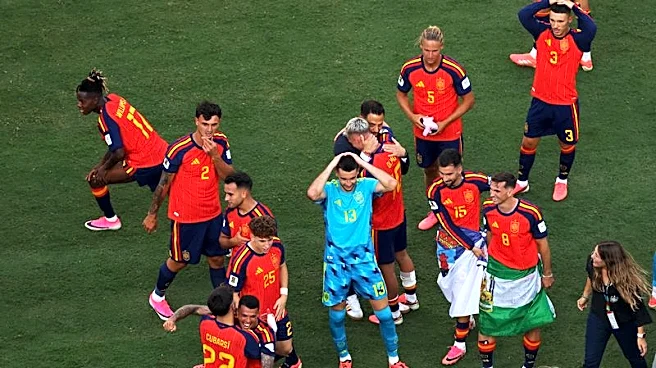
With the score locked at 0-0 after 120 minutes of frustration and anger, the game went to a penalty shootout. Perhaps fittingly, the hero of the match for Spain, Joaquín, became the goat. His penalty, Spain's fourth, was saved by the South Korean keeper. The co-hosts converted all five of their spot-kicks, sealing a historic, albeit tainted, victory to become the first Asian team to reach a World Cup semi-final. The Spanish players, led by their coach José Antonio Camacho, had to be restrained from confronting the referees after the final whistle. In the years since, the referee, Gamal Al-Ghandour, has defended his performance, placing blame on his assistants for the most egregious errors. FIFA later admitted that mistakes were made during the tournament.