






The Anti-Hero Blueprint
For the last two decades, the Mount Rushmore of television has been dominated by a specific type of guy: the difficult man. Think of Tony Soprano, the mob boss balancing brutal violence with panic attacks, or Don Draper, the advertising genius whose identity
was a meticulously crafted lie. These were men of immense talent and immense flaws, whose professional brilliance was matched only by their personal chaos. Walter White of 'Breaking Bad' perfected the formula, transforming from a mild-mannered teacher into a ruthless drug kingpin, justifying every monstrous act as being 'for his family.' We were drawn to their complexity, their charisma, and their willingness to operate in moral gray areas. They built empires—of crime, of advertising, of meth—and we couldn't look away, even as their actions became more and more indefensible.
A Different Kind of Damage
Enter Carmen 'Carmy' Berzatto, the protagonist of 'The Bear'. On the surface, he fits the mold. He's a genius in his field, a celebrated chef who returns to his family's struggling Chicago sandwich shop after his brother's suicide. And he is profoundly broken. But Carmy's damage isn't rooted in violence or womanizing; it's born from family dysfunction, professional trauma, and crippling anxiety. We see his pain not in explosive mob hits or infidelity, but in his panic attacks, his nightmares, and his relentless, perfectionistic drive. His demons are internalized, the byproduct of abusive kitchens and a family that taught him vulnerability was a weakness. The 'bear' he's wrestling with is his own grief and inherited trauma.
From Power Broker to Pan-Scrubber
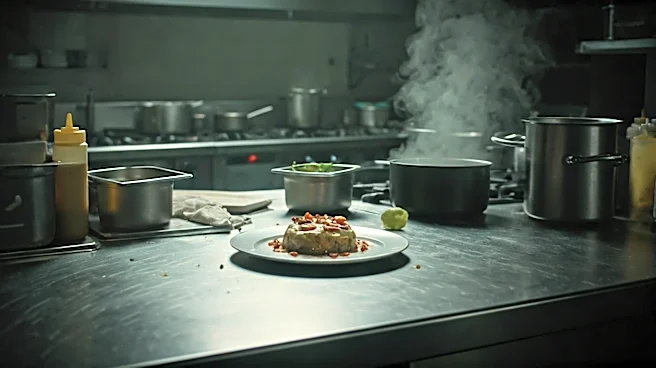
This is where 'The Bear' truly begins to rewrite the playbook. The classic anti-heroes were obsessed with power and dominance. Tony, Don, and Walter wanted to be the men at the top. Carmy's ambition is different. He isn't trying to build an empire; he's trying to build a restaurant. More than that, he's trying to create something beautiful, functional, and excellent out of the chaos he inherited. His goal is not destruction, but creation. He channels his obsessive energy not into outsmarting rivals, but into perfecting a dish. The arena for his struggle is not a boardroom or a back alley, but a cramped, overheated kitchen. He wants to break the cycle of abuse he experienced in high-end restaurants, even if he often fails.
The Charm of a Work-in-Progress
So, is this new, more sensitive broken man really progress? In many ways, yes. Unlike his predecessors, who often left a trail of ruined lives, Carmy's journey is about trying to connect and heal. He is surrounded by a rich cast of characters—like the ambitious sous chef Sydney and his volatile 'cousin' Richie—who are not just satellites orbiting his pain. They challenge him, push back, and have their own fully realized arcs. The show suggests that healing can't happen in isolation; it requires community and a willingness to change. While the old anti-heroes often doubled down on their worst impulses, 'The Bear' is a show about people actively trying, and often failing, to be better. It's less about celebrating a man's darkness and more about watching him desperately try to find the light.